
[et_pb_section fb_built=”1″ _builder_version=”4.16″ _module_preset=”default” global_colors_info=”{}”][et_pb_row _builder_version=”4.16″ _module_preset=”default” global_colors_info=”{}”][et_pb_column type=”4_4″ _builder_version=”4.16″ _module_preset=”default” global_colors_info=”{}”][et_pb_text _builder_version=”4.23″ _module_preset=”default” hover_enabled=”0″ global_colors_info=”{}” sticky_enabled=”0″]
What is the best outdoor kitchen countertop option?
When purchasing an outdoor countertop, several factors need to be taken into consideration to ensure that you select a material and design that will not only look great but also withstand the elements and the wear and tear of outdoor use.
The Best Outdoor Countertop Options Include:
-
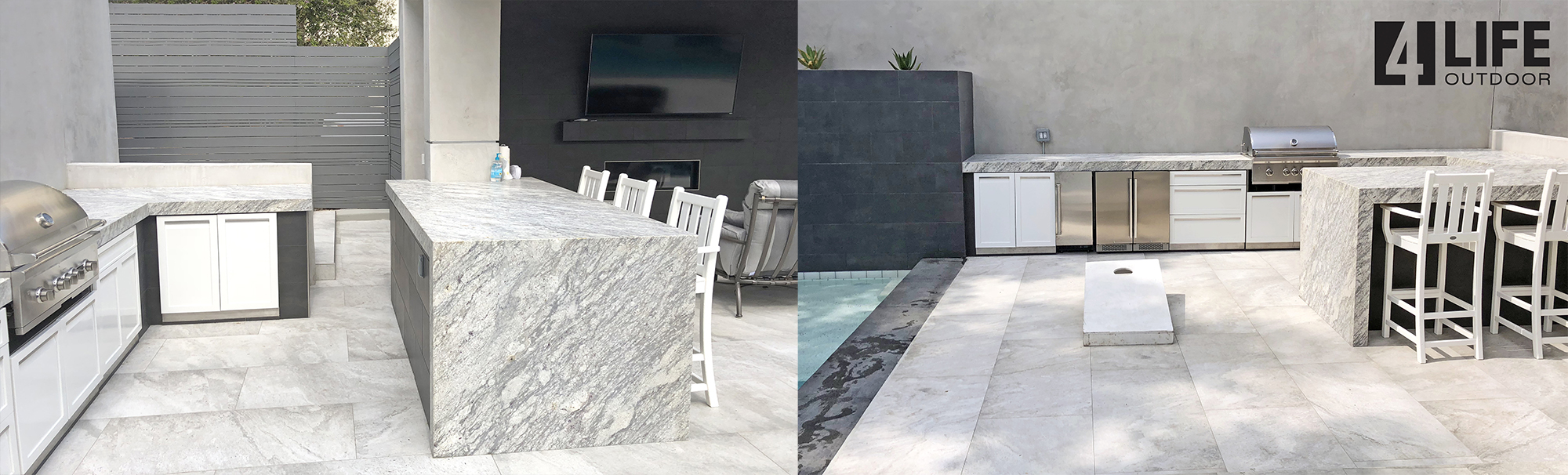
- Granite Outdoor Countertops:
- Soapstone Outdoor Countertops:
- Concrete Outdoor Countertops:
- Quartzite Outdoor Countertops:
- Quartz Outdoor Countertops:
- Dekton and Neolith Outdoor Countertops:
- Limestone Outdoor Countertops:
- Lava Stone Outdoor Countertops:
- Corian Outdoor Countertops:
- Marble Outdoor Countertops:
- Butcher Block Outdoor Countertop:
- Glass Outdoor Countertops:
- Slate Outdoor Countertops:
- Stainless Steel Outdoor Countertops:
Here are some of the key factors to consider:
Durability: The countertop should be able to withstand outdoor conditions such as UV rays from the sun, rain, wind, and possibly snow or ice. It should be resistant to cracking, peeling, and fading.
Material: Common materials for outdoor countertops include granite, concrete, stainless steel, and tile. Each has its advantages and disadvantages in terms of durability, maintenance, and appearance. We will review each material in detail below.
Maintenance: Consider how much maintenance you are willing to perform. Some materials require regular sealing or special cleaners, while others are more low-maintenance.
Heat Resistance: If you plan to cook or place hot items directly on the surface, materials like granite or stainless steel are preferable.
Stain Resistance: Outdoor cooking and entertaining can lead to spills. Certain materials like sealed granite or glazed tiles are less prone to staining.
Color and Design: The color should not only complement your outdoor space but also consider that dark colors can become very hot in direct sunlight, and some colors may fade over time.
Cost: The price of countertops varies widely based on material, thickness, and custom designs. Set a budget beforehand, but also consider the long-term costs associated with maintenance and replacement.
Seams: Depending on the layout of your outdoor kitchen, you may have seams in your countertop. Make sure they are carefully planned to be less noticeable and to avoid areas where water can collect.
Integration with Outdoor Kitchen Elements: Plan for how the countertop will integrate with grills, sinks, or bar areas. The material should be compatible with these elements in terms of support and installation requirements.
Local Climate: Consider the climate in your area. For instance, in areas with freeze-thaw cycles, materials like concrete may require special additives or treatments to prevent cracking.
Installation: Professional installation may be necessary for many materials, which can add to the overall cost. Ensure that the installers have experience with outdoor installations.
Environmental Factors: For the eco-conscious, look into the sustainability of the materials you are considering. Some may be made from recycled content or have a lower environmental impact during manufacturing.
[/et_pb_text][et_pb_text _builder_version=”4.23″ _module_preset=”default” module_id=”GraniteOutdoorCountertops” hover_enabled=”0″ sticky_enabled=”0″ custom_padding=”16px|||||”]
Let’s review the various outdoor kitchen countertop options in detail:
Granite Outdoor Countertops:
When considering the best countertop for your outdoor kitchen, granite comes to the top of the list.
Granite is often considered one of the best options for outdoor kitchens for several reasons.
Durability: Granite is one of the hardest natural stones, making it extremely durable. It resists scratching, chipping, and is hard enough to withstand outdoor kitchen activities.
Heat Resistance: Granite is excellent for outdoor kitchens because it can resist heat very well. You can place hot pans directly onto the surface without worrying about damage.
UV Resistance: Unlike some countertop materials, granite won’t fade under UV light, which means its color and pattern will remain consistent even when exposed to the sun.
Low Maintenance: Once sealed, granite is resistant to stains and is easy to clean. It requires resealing only occasionally (every one to two years, depending on the sealer and the amount of use the countertop gets).
Natural Beauty: Granite comes in a wide variety of colors and patterns, with natural veining that can make an outdoor space more visually appealing. This variety ensures that there’s typically a granite option to match any décor style.
Adds Value: Granite countertops are considered a premium option and can increase the value of your home, including outdoor living spaces.
Weather Resistant: Properly sealed granite can withstand various weather conditions, including rain, wind, and temperature fluctuations, which are inevitable in outdoor settings.
Longevity: When properly maintained, granite countertops can last for decades, which makes them a cost-effective option over a long period.
However, it’s important to acknowledge some potential downsides to keep the perspective balanced:
Cost: Granite can be more expensive than other options, which might not fit every budget.
Sealing Required: To maintain its stain and weather resistance, granite does require sealing upon installation and then periodic resealing.
Weight: Granite is heavy, which may require additional structural support, especially in outdoor kitchen settings.
Susceptibility to Staining: If not sealed properly, granite can be susceptible to staining, particularly from oily or highly pigmented substances.
In comparison to other materials, granite often provides a good balance between aesthetics, functionality, and longevity, which is why many consider it the best choice for outdoor countertops.
Why we like granite countertops:
Granite is a natural stone that is mined in quarries all over the world. It measures 6-6.5 on the Mohs scale of hardness. Just below quartzite. Its resistance from heat and the sun, as well as your hottest pans, is quite remarkable. It can be exposed to and withstand the harshest weather elements. From the northern cold winters to the heat and humidity of the southern states, homeowners can trust granite as an excellent covering choice for their outdoor kitchen.
Its resistance to scratches and cuts from daily use is fantastic. The cost of granite will vary depending on multiple factors such as quality, thickness, and installation.
Granite does require proper maintenance but it is fairly simple. A quick coat of sealant properly applied once or twice a year will keep any damage at bay. Another great quality of granite is that it is available in multiple styles and colors.
Homeowners should always keep in mind that a lighter color will keep their countertop cooler to the touch, especially if exposed to the hot summer heat.
[/et_pb_text][et_pb_text _builder_version=”4.23″ _module_preset=”default” module_id=”SoapstoneOutdoorCountertops” hover_enabled=”0″ sticky_enabled=”0″ custom_padding=”25px|||||”]
Soapstone Outdoor Countertops:
If you’re looking for a low-maintenance option for your outdoor kitchen countertop, soapstone will not disappoint.
Soapstone is an excellent option for a number of reasons, many of which are related to its material properties and the benefits they provide in an outdoor setting:
Durability: Soapstone is a naturally occurring material that is non-porous, dense, and quite durable. It is less brittle than granite or marble, which makes it resistant to chipping or cracking.
Heat Resistance: Soapstone has remarkable heat-resistant properties, making it an excellent choice for outdoor kitchens where it may come into contact with hot pots, pans, or grilling tools.
Non-Porous: Unlike granite and marble, soapstone is non-porous, which means it does not require sealing. Its non-porous nature makes it resistant to bacteria and stains, an important feature for an outdoor kitchen where the countertop might be exposed to a variety of elements.
Chemical Inertness: Soapstone is chemically inert, meaning it is not affected by acidic substances like lemon juice, vinegar, or tomato sauce, which could etch or stain other natural stone surfaces.
Low Maintenance: Because it doesn’t require sealing and is resistant to stains and bacteria, soapstone is low maintenance. Any scratches that do occur can often be sanded out or left to add character to the stone over time.
Aesthetic Appeal: Soapstone has a rich, deep color and a smooth, matte feel that can offer an elegant and sophisticated look to outdoor spaces. It tends to darken naturally over time, which can enhance its character.
UV Resistance: It does not fade when exposed to the UV radiation from sunlight, making it ideal for outdoor environments where it will be exposed to the sun.
Temperature Stability: Soapstone can absorb and radiate heat, which can be particularly pleasant in cooler climates where a countertop that remains warmer to the touch might be appreciated.
Ease of Repair: Minor scratches and dents can often be easily repaired by the homeowner by sanding and applying mineral oil, rather than requiring professional repair.
However, it’s important to note that soapstone is softer than granite, which means it can be prone to scratching over time. Some homeowners see this as a disadvantage, while others feel that the gradual development of a patina adds character to the material.
Overall, soapstone’s natural beauty, durability, and low maintenance requirements make it a great choice for outdoor countertops, especially for those who appreciate natural materials that age and develop character over time.
Why we like soapstone countertops:
No need to seal it; any staining can easily be washed off with soap and water. Minor scratches can be remedied with a quick touch of sandpaper. Mineral oil can be applied to it to enhance its shine; however, just a wash with water will keep the soapstone countertop clean and beautiful for years.
It can hold your hot pans without sustaining any damage. Because of its naturally dark finish, it will attract the sun’s heat but at a price lower than granite, it makes a very attractive option for any homeowners looking for an easy-to-maintain, clean-looking finish.
[/et_pb_text][et_pb_text _builder_version=”4.23″ _module_preset=”default” module_id=”Concrete_Outdoor_Countertops” hover_enabled=”0″ sticky_enabled=”0″ custom_padding=”28px|||||”]
Concrete Outdoor Countertops:
Concrete countertops have become more and more popular and are a safe choice for the outdoors.
Concrete is an increasingly popular material for outdoor countertops due to its versatility and durability. Here are several reasons why concrete can be a great choice for outdoor environments:
Customizability: Concrete countertops are highly customizable. They can be poured into any shape and size to fit the specific design and space of an outdoor kitchen. Additionally, pigments can be added to the concrete mix to achieve a wide range of colors, and various finishes and textures can be applied.
Durability: Concrete is inherently strong and can withstand the heavy use that often comes with outdoor cooking and entertaining. It’s able to bear substantial weight, which is useful for outdoor spaces that may need to accommodate heavy grills, smokers, or other appliances.
Weather Resistance: When properly sealed, concrete is resistant to the elements, including sun, rain, and wind. Special sealants can be used to make concrete surfaces resistant to UV rays, reducing the likelihood of fading over time.
Heat Resistance: Concrete is naturally heat resistant, which makes it a good choice for placing hot pots and pans on the surface without the risk of scorching or cracking.
Aesthetic Quality: Concrete has a unique, modern aesthetic that can be very appealing. Its industrial look is currently on-trend and can complement a wide range of outdoor décor styles. It can also be treated to mimic the look of natural stone or brick.
Longevity: If maintained correctly, concrete countertops can last a very long time. They’re a solid investment for an outdoor kitchen, where longevity can be a significant concern due to exposure to the elements.
Repairable: If a concrete countertop becomes chipped or cracked, it can often be repaired without having to replace the entire slab, which is beneficial in an outdoor setting where wear and tear are more likely.
Eco-Friendly Options: For those interested in sustainability, concrete can be an eco-friendly choice, especially if you use local or recycled materials in the mix or choose a supplier who uses sustainable practices.
Texture and Character: Concrete countertops acquire character over time. Like soapstone, they can develop a patina that many homeowners appreciate for its rustic charm.
However, it’s important to consider a few drawbacks as well:
Maintenance: Concrete needs to be sealed regularly to maintain its appearance and durability. Without proper sealing, concrete can absorb stains and moisture, leading to potential damage.
Weight: Concrete is heavy, and its installation often requires substantial support, which can be a drawback in certain outdoor spaces.
Cracking: Although durable, concrete is not completely immune to cracking. Changes in temperature and settling can cause small cracks to develop, although these are often considered part of the material’s aesthetic appeal.
Overall, for those who appreciate a customized, modern look and have the ability to maintain it, concrete can be an excellent choice for an outdoor countertop.
Final thoughts on concrete countertops:
It has a simple, clean look and feel and can be customized by embedding stone or tile. Concrete can be poured to fit any shape or style. It also comes in various colors; however, homeowners need to keep in mind that sun exposure may cause the color to get a yellowish tone or fade unless the kitchen is always under the shade. Choosing earth tones can also help in preserving the color. The safest bet is to stick to earth-tone colors.
A proper sealant applied at installation will prevent it from cracking. An epoxy or urethane sealant will outlast an acrylic resin one by a few years. They are easy to clean with a mild detergent but should be protected against extreme heat such as hot pans. Using cutting boards is best to minimize potential damage from scratches and cuts.
[/et_pb_text][et_pb_text _builder_version=”4.23″ _module_preset=”default” module_id=”Quartzite_Outdoor_Countertops” hover_enabled=”0″ sticky_enabled=”0″ custom_padding=”27px|||||”]
Quartzite Outdoor Countertops:
The beauty of quartzite is that it is more durable than granite. This natural stone will hold your hottest pots and pans without damage and its veining, similar to marble, will give any outdoor kitchen a luxurious feel.
Quartzite is another excellent choice for outdoor countertops due to its natural beauty and durability. It is important not to confuse quartzite with quartz; quartzite is a natural stone, whereas quartz is a man-made engineered stone. Here are the reasons why quartzite is well-suited for outdoor kitchens:
Durability: Quartzite is an incredibly hard material, even harder than granite in some cases, which makes it very durable. It resists scratches and is less likely to chip or crack compared to other stones.
Heat Resistance: Quartzite has good heat resistance, which is essential for an outdoor kitchen environment where the countertop may be exposed to direct sunlight or hot pots and pans.
UV Resistance: Unlike some other natural stones, quartzite is highly resistant to UV rays, meaning it won’t fade or discolor over time when exposed to sunlight.
Natural Beauty: Quartzite offers a sophisticated look with its unique veining and wide range of colors. This can make outdoor countertops not only functional but also a central design feature.
Low Porosity: Most quartzite options are less porous than materials like marble, and some are as low as granite, making them resistant to stains. However, they still should be sealed for outdoor use to ensure maximum resistance to the elements.
Low Maintenance: Once sealed, quartzite is relatively easy to clean and maintain. It does not require special cleaners and can be wiped down with just soap and water.
Longevity: Given its durability, when properly maintained, a quartzite countertop can last for many years, making it a good long-term investment for an outdoor space.
Value Addition: Like granite, quartzite is considered a premium material and can add value to a home due to its luxurious appearance and durability.
However, there are also a few considerations to keep in mind:
Cost: Quartzite tends to be on the pricier side, similar to or sometimes more expensive than high-end granite.
Sealing: While it is less porous than marble, quartzite still requires sealing to protect it against stains and weather-related damage. The sealing process will need to be repeated periodically.
Weight: As with granite and concrete, quartzite is heavy and will likely require professional installation with adequate support structures.
Final thoughts on concrete countertops:
Quartzite combines the practicality needed for outdoor kitchen demands with the visual appeal of natural stone. Its resilience and unique aesthetic make it a top-tier choice for homeowners looking to create a stunning and functional outdoor living space.
[/et_pb_text][et_pb_text _builder_version=”4.23″ _module_preset=”default” module_id=”Quartz_Outdoor_Countertops” hover_enabled=”0″ sticky_enabled=”0″ custom_padding=”27px|||||”]
Quartz Outdoor Countertops:
Is quartz a good option for an outdoor countertop?
Quartz, which is a man-made engineered stone made from natural quartz crystals and resin, is a popular choice for indoor countertops, but it is generally not recommended for outdoor use. This recommendation comes from the fact that quartz can be sensitive to UV light and the weather conditions typically encountered outdoors.
However, if your outdoor setting is covered and experiences mild conditions—limited direct sunlight, moderate temperatures, and minimal exposure to the elements—some homeowners may still choose quartz for its aesthetic qualities and ease of maintenance. In these specific situations, with the right precautions, quartz can be used outdoors. It is vital to choose a high-quality quartz designed for potential outdoor use and to follow the manufacturer’s recommendations closely.
Let’s explore the properties that make quartz a favored choice for indoor use and consider how they might translate to an outdoor setting, under certain conditions:
Aesthetic Variety: Quartz comes in a wide array of colors and patterns, including some that mimic natural stone like marble and granite. This variety allows for great flexibility in design.
Non-Porous Surface: Quartz is non-porous, which means it does not require sealing and is resistant to staining—qualities that can be advantageous in a countertop, indoors or outdoors.
Hygienic: The non-porous nature of quartz also means it does not harbor bacteria or viruses, which is a beneficial feature for a food preparation surface.
Low Maintenance: Quartz countertops are easy to care for and do not require the regular maintenance that natural stones do. Cleaning is simple, typically needing only soap and water.
Durability: Quartz is hard and scratch-resistant, which makes it durable against the wear and tear of kitchen use.
Despite these favorable attributes, there are significant reasons why quartz might not be the best choice for an outdoor kitchen:
UV Sensitivity: The resin in quartz can discolor and degrade when exposed to the sun’s UV rays, which can be a significant problem for outdoor applications.
Heat Sensitivity: Quartz can be damaged by high temperatures, so placing hot pans directly onto the surface could cause discoloration or even cracking.
Weather Exposure: The freeze-thaw cycle in certain climates can be especially harsh on quartz, leading to potential cracking and other damage.
If you’re set on using quartz for an outdoor countertop, you would need to be mindful of these limitations and consider how they align with your geographic location, outdoor kitchen setup, and your willingness to replace the countertops if they become damaged by the elements.
[/et_pb_text][et_pb_text _builder_version=”4.23″ _module_preset=”default” module_id=”DektonandNeolithOutdoorCountertops” hover_enabled=”0″ sticky_enabled=”0″ custom_padding=”27px|||||”]
Dekton and Neolith Outdoor Countertops:
A newer popular countertop option is Dekton or Neolith. They are simply different brands but use the same process.
Quartz, glass, and porcelain are fused under extreme heat and form an ultra-compact surface. It is extremely durable and comes in various styles and colors.
This process simulates the metamorphic change that natural stone undergoes over thousands of years but occurs in a significantly accelerated fashion. These materials offer a number of benefits for outdoor countertops:
UV Resistance: Both Dekton and Neolith are highly UV-resistant, which means they won’t fade or degrade with prolonged exposure to sunlight, making them ideal for outdoor use where sunlight is a constant factor.
Heat Resistance: These materials can withstand very high temperatures without burning, scorching, or cracking, so hot pots and pans, or even hot coals, should not damage the surface.
Stain Resistance: The non-porous nature of these surfaces makes them resistant to staining from common spills, which is crucial for an outdoor kitchen environment where the countertop may be exposed to various substances.
Scratch Resistance: Both materials are highly scratch-resistant due to their hardness, which is particularly important for surfaces used in food preparation and dining.
Low Maintenance: They don’t require sealing or special maintenance routines, making them convenient for outdoor settings where homeowners might prefer materials that don’t need constant upkeep.
Durability: Dekton and Neolith are both known for their exceptional durability and strength, which makes them suitable for the wear and tear of outdoor kitchen activities.
Freeze-Thaw Resistance: Both materials perform well in freeze-thaw cycles, which can be a crucial consideration in climates that experience such conditions.
Versatility in Design: They come in a wide range of colors and finishes, some of which mimic natural stone, wood, and even concrete, allowing for flexible design options that can match any outdoor kitchen style.
Hygienic: The non-porous quality of these surfaces prevents the growth of mold or mildew, which is an important consideration for outdoor spaces that may be more exposed to moisture.
Impact Resistance: Dekton and Neolith are both known for their high impact resistance, reducing the risk of damage from dropped objects.
Despite these impressive qualities, there are a few considerations:
Cost: Both Dekton and Neolith are considered premium materials and can be on the higher end of the cost spectrum for countertops.
Installation: The installation of these materials usually requires specialized tools and expertise, which means it should be done by professionals who are familiar with the product. Incorrect installation could lead to issues such as chipping or cracking.
Given their robust properties, both Dekton and Neolith are excellent choices for outdoor kitchens, especially in areas where weather conditions can be harsh and variable. Their technical characteristics make them some of the most durable and low-maintenance options available on the market.
Final thoughts on these countertops:
Dekton and Neolith will provide better stain, scratch, and heat resistance than many other countertop options on the market.
The slabs produced are quite large and as a result, homeowners will get a mostly seamless finish. Dekton does get hot to the touch when exposed to heat but has excellent heat resistance. You could set a slab on fire and no damage would result from it.
The downfall with Dekton is that it is one of the priciest options offered, and although the color goes through the entire thickness of the material, the patterns and textures are printed on the surface. If your countertop chips, it may therefore be more noticeable than another stone. This is something to consider when investing in a countertop at a higher price point. To this day, there are still few Dekton fabricators and installers.
[/et_pb_text][et_pb_text _builder_version=”4.23″ _module_preset=”default” module_id=”Limestone_Outdoor_Countertop” hover_enabled=”0″ sticky_enabled=”0″ custom_padding=”27px|||||”]
Limestone Outdoor Countertop:
Limestone is a natural stone that is often used in architecture and home design for its classic and elegant aesthetic. When considering limestone for outdoor countertops, there are several positive attributes, but also important caveats to bear in mind:
Positive Attributes:
Natural Beauty: Limestone has a natural, earthy appeal with a wide range of textures and colors, often featuring fossilized plant and animal life that can add character and uniqueness to an outdoor space.
Heat Resistance: Like many natural stones, limestone is resistant to heat, making it suitable for areas where cooking and grilling will take place.
Design Versatility: Limestone can complement a variety of design styles, from rustic to contemporary, and can be cut and finished to suit specific design preferences.
Outdoor Harmony: Its natural tones blend well with outdoor elements and landscapes, integrating seamlessly into a variety of outdoor living spaces.
Important Caveats:
Porosity: Limestone is a porous material, which means it can absorb liquids and stains if not properly sealed. It requires regular sealing to protect it from stains, weather, and wear.
Softness and Scratching: Limestone is a softer stone compared to granite or quartzite, making it more susceptible to scratches and abrasions, which could be an issue in a high-use area like an outdoor kitchen.
Acid Sensitivity: Limestone reacts negatively to acidic substances (like lemon juice, tomato sauce, and certain cleaners), which can etch the surface and leave marks. This is particularly relevant in an outdoor kitchen setting where such spills might occur.
Weathering: If the countertop is not adequately protected, limestone can weather and degrade over time when exposed to harsh outdoor conditions, such as freeze-thaw cycles.
Maintenance: To maintain its appearance, limestone countertops will need regular cleaning and resealing. Without this maintenance, the longevity and appearance of the countertop could be compromised.
Impact Damage: Being softer, limestone may chip or crack if heavy objects are dropped on it, meaning it could be less forgiving than harder stone options.
Final thoughts on these countertops:
While limestone can offer a beautiful and natural look for an outdoor countertop, it’s important to consider its maintenance requirements and susceptibility to wear and weathering. For homeowners who love the look of limestone and are committed to the necessary upkeep, it can be a charming addition to an outdoor kitchen. However, for those looking for a lower maintenance option, other materials like granite, quartzite, Dekton, or Neolith may be more practical.
[/et_pb_text][et_pb_text _builder_version=”4.23″ _module_preset=”default” module_id=”Lava_Stone_Outdoor_Countertops” hover_enabled=”0″ sticky_enabled=”0″ custom_padding=”27px|||||”]
Lava Stone Outdoor Countertops:
Lava stone countertops, which are made from volcanic rock, are a luxurious and unique option for outdoor kitchens. They offer several compelling benefits that can make them a great choice for your outdoor space:
Durability: Lava stone is known for its strength and durability. It is incredibly hard and resistant to scratches, chips, and cracks, which makes it ideal for the high-traffic environment of an outdoor kitchen.
Heat Resistance: Given its volcanic origin, lava stone has excellent heat resistance, which is a critical feature for surfaces that may be in close proximity to grills and stoves.
Weather Resistance: Lava stone withstands harsh weather conditions very well, including UV rays, rain, and freeze-thaw cycles. Its resistance to weathering means it can maintain its appearance over time without showing significant wear.
Non-Porous: Unlike other natural stones, lava stone is non-porous, meaning it does not require sealing and will not harbor bacteria or mold, nor will it stain easily. This makes it very low maintenance and easy to clean.
Color Stability: The enamel finish applied to lava stone countertops is not just attractive but also highly resistant to fading. The color of your countertop will remain vibrant even with prolonged exposure to sunlight.
Customization: Lava stone can be glazed with enamel in a wide range of colors, offering a level of customization not typically available with natural stone. The glossy finish also adds a modern touch to the outdoor space.
Eco-Friendly: Lava stone is a natural and sustainable material. Additionally, the production process is often eco-friendly, as the energy used to heat the stone can come from the natural cooling process of the lava.
However, there are some considerations to keep in mind:
Cost: Lava stone countertops are on the high end of the price spectrum. The extraction, shipping, and manufacturing processes contribute to the cost, as well as the material’s imported status (most lava stone for countertops comes from Italy or France).
Weight: Like most stone countertops, lava stone is heavy and may require reinforced cabinetry and a professional installation team.
Limited Availability: It’s not as commonly found as granite or quartz, so it may take longer to source and could limit your options for suppliers.
Final thoughts on these countertops:
Lava stone countertops offer a unique combination of beauty, durability, and low maintenance that can be particularly appealing for an outdoor kitchen. Their ability to withstand the elements with minimal upkeep makes them an excellent investment for those willing to bear the higher upfront cost for a long-lasting and striking outdoor feature.
[/et_pb_text][et_pb_text _builder_version=”4.23″ _module_preset=”default” module_id=”Corian_Outdoor_Countertops” hover_enabled=”0″ sticky_enabled=”0″ custom_padding=”27px|||||”]
Corian Outdoor Countertops:
Corian is a brand of solid surface countertops created by DuPont, composed of acrylic polymer and alumina trihydrate (a material derived from bauxite ore). While traditionally used for indoor countertops, Corian’s properties can also make it suitable for outdoor kitchen countertops in certain climates and conditions. Here’s why Corian could be considered a good option for outdoor countertops:
Seamless Design: Corian can be installed with virtually invisible seams, giving a sleek and continuous surface that is both visually appealing and practical for cleaning and maintenance.
Non-Porous: It is a non-porous material that resists stains and does not harbor bacteria, mold, or mildew, which is especially important in an outdoor setting where countertops are exposed to more environmental elements.
Easy to Clean: The non-porous nature of Corian means that it’s very easy to clean. It can be wiped down with simple cleaning solutions without the need for harsh chemicals.
Repairable: If the surface is scratched or damaged, Corian can often be repaired to like-new condition, which can be a significant advantage over natural stone that might require complete replacement.
Customizable: It can be formed into virtually any shape and is available in a wide range of colors and finishes, including ones that mimic natural stone, allowing for custom design solutions that fit any outdoor aesthetic.
Thermal Expansion: Corian has the capacity to expand and contract with temperature changes, which can be beneficial in outdoor environments where temperatures fluctuate.
However, when considering Corian for outdoor use, there are also limitations and concerns to be aware of:
Heat Sensitivity: Corian can be damaged by high heat, so hot pans or grills should not be placed directly on the surface without protection.
Limited Weather Resistance: Prolonged exposure to UV light can cause colors to fade, and the material can potentially warp or crack over time if exposed to extreme temperatures, making it less ideal for outdoor kitchens in very sunny or high-temperature climates unless adequately shaded.
Scratches and Burns: The surface can scratch and burn more easily than materials like granite or quartzite. However, minor scratches can be buffed out.
Cost: While generally less expensive than quartz or natural stone, Corian is still a premium surface, and the cost can add up, especially for custom designs.
Final thoughts on these countertops:
Corian is a plastic aggregate material and not a natural stone. Corian countertops are a choice to consider and they are used outdoors in limited settings; however, they are not resistant to heat and may scratch easily, making them a poor or risky choice for an outdoor kitchen. It is not ideal to put down hot pans as it may damage Corian. From a price standpoint, the cost of Corian is slightly below stones like granite. This slight difference may not be enough considering the durability of its counterparts like granite.
[/et_pb_text][et_pb_text _builder_version=”4.23″ _module_preset=”default” module_id=”Marble_Outdoor_Countertops” hover_enabled=”0″ sticky_enabled=”0″ custom_padding=”27px|||||”]
Marble Outdoor Countertops:
Marble is a timeless and luxurious material that can make for beautiful outdoor countertops. It’s favored in design for its elegant, classic look and the unique veining that characterizes each slab. Here are the reasons why marble can be a great choice for outdoor countertops:
Aesthetics: Marble is synonymous with luxury and can elevate the design of any outdoor kitchen. Its natural veining and the variety of colors and patterns available can match a range of design schemes.
Natural Coolness: Marble remains cool to the touch, which can be a pleasant feature for outdoor cooking areas, especially in warmer climates.
Heat Resistance: Marble is heat resistant, making it suitable for areas where cooking is done, although care should still be taken to avoid placing hot items directly on the surface to prevent discoloration or damage.
Durability: When properly maintained, marble can be a long-lasting countertop option. It’s been used for centuries in various architectural elements, showing its longevity.
However, it’s important to be aware of the drawbacks and considerations when choosing marble for outdoor use:
Porosity: Marble is a porous material that can stain and etch easily if not sealed properly. Spills should be cleaned up immediately to prevent damage, and the stone will need to be resealed periodically.
Maintenance: To keep marble looking its best outdoors, it requires regular maintenance. This includes sealing, cleaning, and sometimes professional polishing to remove any etching or surface stains.
Weather Sensitivity: Marble may not fare well in extreme weather conditions. It can show wear from acid rain, and freeze-thaw cycles can cause cracks or spalling.
Scratching: Marble can scratch more easily than harder stones like granite, so cutting directly on it should be avoided.
Cost: Marble is often on the higher end of the price spectrum for countertop materials.
For outdoor kitchens, honed marble is often recommended over polished because it doesn’t show etches and scratches as readily. The patina that develops over time can be appreciated by those who like a natural, lived-in look.
In summary, marble can be a great option for outdoor countertops if you are willing to commit to the maintenance required to protect it from the elements and to accept the natural patina that will develop from its use. It’s most suitable for covered or partially covered outdoor spaces where it will be somewhat protected from harsh weather conditions.
Final thoughts on these countertops:
Marble has been the choice of many all over the world for years. Each slab is a one-of-a-kind piece of art. It is naturally porous and must be properly protected, especially in an outdoor context. Even polished, marble will be altered by various weather conditions like rain and snow and acidic food and drinks will cause etching. If you select a honed finish for your marble countertop and are not worried about natural aging caused by the elements, the pros of that luxurious, unique and elegant look marble offers, then it may be for you.
[/et_pb_text][et_pb_text _builder_version=”4.23″ _module_preset=”default” module_id=”Butcher_Block_Countertops” hover_enabled=”0″ sticky_enabled=”0″ custom_padding=”27px|||||”]
Butcher Block Countertops:
Butcher block countertops, traditionally made from pieces of wood cut straight from the tree and glued together, provide a warm and inviting look, adding a touch of natural charm to any outdoor space. They can be a great option for outdoor countertops for several reasons:
Aesthetics: Wood offers a warm, natural appearance that can make an outdoor space feel more inviting and cozy. It complements many design styles, from rustic to modern.
Functionality: Butcher block is excellent for food preparation. It’s a favorite among chefs for its ease of use when chopping and preparing food.
Heat Resistance: Wood is naturally resistant to moderate heat, which makes it a good candidate for areas away from direct heat sources like stoves or grills.
Repairable: Scratches and cuts can be sanded out of wood, and the surface can be refinished, which can extend the life of the countertop significantly.
Workability: Butcher block can be easier to work with than stone or metal. It can be cut and shaped on-site, which might reduce installation costs.
Eco-Friendly: Wood is a renewable resource, and butcher block counters can be made from reclaimed or sustainably harvested wood.
Despite these advantages, there are also important considerations to keep in mind with butcher block countertops outdoors:
Maintenance: Wood is inherently porous and requires regular sealing to protect against moisture, stains, and bacteria, especially outdoors.
Weather Sensitivity: Wood can warp, crack, or rot if exposed to the elements, particularly moisture and direct sunlight, so it’s not suitable for all climates unless it’s well-protected.
Regular Treatment: Butcher block countertops typically need to be oiled every few months to maintain their look and durability.
Not Fully Heatproof: Hot pots and pans can’t be placed directly on the wood without risking burn marks, so trivets or heat pads are needed.
Prone to Damage: Wood can be damaged by sharp knives and heavy use, so it will likely show wear over time.
For an outdoor kitchen, it is recommended to use denser wood like teak or ipe, which are more resistant to moisture and can better withstand the elements compared to softer woods. Furthermore, the location of the outdoor kitchen (whether it’s fully exposed or under a covered patio) will also dictate the practicality of using wood countertops.
Final thoughts on these countertops:
While butcher block countertops can offer a beautiful and functional surface for an outdoor kitchen, they do require a higher level of maintenance to ensure longevity. If you appreciate the warmth and workability of wood and are committed to its upkeep, butcher block can be a rewarding choice for an outdoor space.
Butcher block countertops have never gone out of style since the late 1800s. Fortunately, they have come a long way from sycamore log sections.
They are beautiful and rustic and can be customized in various ways to fit the style you’re looking for. The downfall with butcher block countertops is that they are not low maintenance, especially if exposed to the elements. They need to be oiled and varnished frequently to keep their shine, they may not get as hot under the sun as other covering options, however, you need to use some protection when putting down your hot pans and BBQ utensils to protect from scratches and markings.
From a price standpoint, they are an attractive option nonetheless. Hickory and ipe wood are two great types of wood that are strong and durable, provided they are cared for using a good food-grade oil applied frequently to keep them from moisture and rot, as well as a yearly coat of varnish.
[/et_pb_text][et_pb_text _builder_version=”4.23″ _module_preset=”default” module_id=”Glass_Outdoor_Countertops” hover_enabled=”0″ sticky_enabled=”0″ custom_padding=”27px|||||”]
Glass Outdoor Countertops:
Glass countertops offer a sleek and modern look that can be especially striking in an outdoor setting. They have several characteristics that can make them a great choice for outdoor countertops:
Durability: Tempered glass countertops are incredibly strong and durable. They are designed to withstand heavy usage, and unlike regular glass, tempered glass is heat treated to be more resistant to heat, scratches, and impact.
Low Maintenance: Glass is non-porous, so it resists stains and does not harbor bacteria or mold, making it easy to clean and hygienic. A quick wipe with glass cleaner or soapy water can keep it looking pristine.
Aesthetically Pleasing: Glass countertops can offer a range of looks, from crystal clear to colored or textured varieties, allowing for unique design elements. LED lights can also be incorporated beneath the glass for dramatic lighting effects.
Environmental Resistance: Being non-porous, glass is not affected by UV rays, which means it won’t fade or degrade from sun exposure, making it ideal for outdoor environments.
Recyclable Material: Glass countertops can be made from recycled materials, making them an eco-friendly option for homeowners concerned with sustainability.
Hygienic Surface: Since glass is non-porous, there are no crevices for bacteria to accumulate, which is especially important for food preparation areas.
Weather Resistant: Glass can withstand most weather conditions without deteriorating, although it’s always best to install in a covered area to protect from severe weather.
Despite these benefits, there are considerations that must be taken into account:
Heat Limitations: While tempered glass is heat resistant, extreme heat or direct contact with hot pots can potentially damage the surface. It’s advisable to use trivets or hot pads to mitigate this risk.
Scratches and Chips: High-quality tempered glass is scratch-resistant, but not scratch-proof. It can also chip or crack upon impact with hard objects, especially along the edges.
Cost: Custom glass countertops can be on the higher end of the price range, especially for thick, tempered, and treated varieties.
Fingerprints and Smudges: Glass can show fingerprints, smudges, and water spots more readily than other materials, so it may require frequent cleaning to keep it looking its best.
When choosing glass countertops for an outdoor kitchen, it’s crucial to ensure that the glass is tempered for safety reasons. If the glass breaks, tempered glass will crumble into small granular chunks instead of splintering into jagged shards, which is far less dangerous.
Final thoughts on these countertops:
Glass countertops could be a stunning and modern addition to an outdoor kitchen, providing a unique look and a hygienic, easy-to-clean surface. They are best suited for homeowners looking for a contemporary design who are also willing to provide the necessary care and maintenance.
Though glass isn’t commonly seen as a countertop option, it is available and customizable in many ways. Opaque options or a solid covering would need to go under the glass, to hide the inside of the cabinets.
They give a modern, lighter feel to your outdoor décor. They are as durable as their stone countertops and very low maintenance. In fact, they are heat, scratch, and stain resistant as well as easy to clean, making them a very hygienic choice for food preps.
Cost-wise, a glass countertop will cost you more than granite, though if you’re looking for a piece of art as outdoor kitchen covering, it can be worth the extra.
[/et_pb_text][et_pb_text _builder_version=”4.23″ _module_preset=”default” module_id=”Slate_Outdoor_Countertops” hover_enabled=”0″ sticky_enabled=”0″ custom_padding=”20px|||||”]
Slate Outdoor Countertops:
Slate can be a great choice for an outdoor kitchen countertop. It is quite durable and heat resistant. You can polish any minor scratches as you would with a soapstone countertop. However, no two pieces are the same and some can be more porous than others.
Slate is a fine-grained, metamorphic rock that is formed from shale and consists mainly of minerals like quartz and muscovite or illite, often with biotite, chlorite, hematite, and pyrite along with, less frequently, apatite, graphite, kaolin, magnetite, tourmaline, or zircon as well as feldspar. It has a number of properties that make it a suitable and attractive choice for outdoor countertops:
Durability: Slate is known for its strength and durability, making it resistant to cracks and breaks. It can handle heavy use, which is ideal for an outdoor setting where furniture and fixtures may be subject to more wear and tear.
Low Absorption Rate: Slate has a low absorption rate, so it is less likely to harbor bacteria and mold, and it stands up well against stains when properly sealed.
Low Maintenance: Unlike some other natural stone options, slate does not require frequent sealing. Its non-porous nature means that it can be easily cleaned with just soap and water.
Aesthetic Appeal: Slate countertops have a natural and understated elegance with a distinct cleft pattern that is more muted than the dramatic veins of marble or granite. This can complement many outdoor settings without overpowering them.
Heat Resistance: Slate is naturally heat-resistant, making it a good candidate for use near grills and stoves. However, like with all natural stone, it is still recommended to use trivets or heat pads to avoid any chance of thermal shock.
Variety of Finishes: Slate can be found in a variety of textures, from smooth honed surfaces to more natural, cleft finishes, allowing for flexibility in design.
Color Stability: The colors in slate are fairly stable, meaning that exposure to the UV rays from the sun won’t cause it to fade as quickly as some other materials.
However, there are some drawbacks to consider:
Chipping and Scratching: Slate is a softer stone compared to granite or quartzite, which means it can be prone to scratching and chipping if abused.
Weather Sensitivity: While slate is generally good with weather resistance, in very cold climates it can be susceptible to freeze-thaw cycles, which can cause flaking or spalling over time.
Final thoughts on these countertops:
When considering slate for outdoor countertops, it is best to choose slate that is specifically rated for outdoor use. This will ensure that it has been tested for factors such as frost resistance and strength. Additionally, while slate is durable, it’s wise to take common-sense precautions like sealing when needed and not abusing the surface with heavy impacts or extremely hot objects.
Slate countertops can be a practical and beautiful addition to an outdoor kitchen, offering a unique look with relatively easy maintenance, as long as they are properly cared for and used in an appropriate climate.
[/et_pb_text][et_pb_text _builder_version=”4.23″ _module_preset=”default” module_id=”Stainless_Steel_Outdoor_Countertops” hover_enabled=”0″ sticky_enabled=”0″ custom_padding=”13px||19px|||”]
Stainless Steel Outdoor Countertops
Stainless steel countertops are a popular choice for outdoor kitchens for a multitude of reasons, offering durability, functionality, and a sleek aesthetic. Here’s why they can be a great option for outdoor settings:
Durability: Stainless steel is incredibly durable and can withstand a lot of abuse. It’s resistant to heat, rust, corrosion, and stains, making it an ideal surface for the varying conditions outdoors.
Low Maintenance: These countertops are very easy to clean and maintain. They don’t require sealing or special cleaners — soap and water or a mild detergent are usually sufficient to keep them clean.
Hygienic: Stainless steel is non-porous, which prevents bacteria, mold, and mildew from penetrating the surface, making it a sanitary option for food preparation.
Weather Resistant: Unlike some countertop materials, stainless steel won’t fade in the sun, crack during cold winters, or degrade with exposure to rain or humidity.
Heat Resistance: Stainless steel can withstand high temperatures without damage, which is especially beneficial in an area where grilling and cooking are commonplace.
Modern Aesthetic: The sleek look of stainless steel can complement many outdoor kitchen styles, especially contemporary and modern designs.
Reflective: The shiny surface can help to reflect light, brightening up the outdoor space, which is particularly useful in shaded areas.
Customizable: Stainless steel countertops can be custom-fabricated to fit any size and can include integrated sinks and backsplashes for a seamless look.
However, stainless steel countertops also have some drawbacks that should be considered:
Scratching and Dents: Over time, stainless steel can scratch and dent, although many users feel this adds to the patina and character of the material.
Noise: Utensils and pots can make a noticeable noise when they come into contact with a stainless steel surface.
Cost: Depending on the gauge (thickness) and the custom features, stainless steel can be an expensive material option.
Heat Conductivity: While resistant to heat damage, stainless steel can get quite hot when exposed to the sun or high temperatures, which might not be ideal in some climates.
Final thoughts on these countertops:
Stainless steel countertops are a highly functional, durable, and stylish choice for outdoor kitchens, withstanding a range of weather conditions and requiring minimal maintenance. If you appreciate a professional culinary look and prioritize durability and hygiene, stainless steel could be the perfect material for your outdoor countertop needs.
If you have any questions, please feel free to give us a call or email – we are always happy to help with your outdoor kitchen questions.
Talk soon!
4 Life Outdoor
[/et_pb_text][/et_pb_column][/et_pb_row][et_pb_row column_structure=”1_3,1_3,1_3″ _builder_version=”4.16″ module_alignment=”center” custom_margin=”|auto|22px|auto||” custom_padding=”0px||8px|||” global_colors_info=”{}” theme_builder_area=”post_content”][et_pb_column type=”1_3″ _builder_version=”4.16″ global_colors_info=”{}” theme_builder_area=”post_content”][et_pb_button button_url=”https://atomic-temporary-132789179.wpcomstaging.com/outdoor-kitchen-sale/” button_text=”View All Outdoor Kitchen Sets” button_alignment=”center” _builder_version=”4.23″ _module_preset=”default” custom_button=”on” button_text_size=”14px” button_text_color=”#FFFFFF” button_bg_color=”#000000″ button_border_width=”2px” button_border_color=”#000000″ button_border_radius=”0px” button_letter_spacing=”1px” button_icon_color=”#E09900″ transform_scale=”110%|110%” background_layout=”dark” global_colors_info=”{}” theme_builder_area=”post_content”][/et_pb_button][/et_pb_column][et_pb_column type=”1_3″ _builder_version=”4.16″ global_colors_info=”{}” theme_builder_area=”post_content”][et_pb_button button_url=”https://atomic-temporary-132789179.wpcomstaging.com/5ft-to-9ft-outdoor-kitchen-cabinet-sets/” button_text=”View 5.5 Ft – 9 Ft Outdoor Kitchens” button_alignment=”center” _builder_version=”4.21.0″ _module_preset=”default” custom_button=”on” button_text_size=”14px” button_text_color=”#FFFFFF” button_bg_color=”#000000″ button_border_color=”#000000″ button_border_radius=”0px” button_letter_spacing=”1px” button_icon_color=”#E09900″ transform_scale=”110%|110%” background_layout=”dark” global_colors_info=”{}” theme_builder_area=”post_content”][/et_pb_button][/et_pb_column][et_pb_column type=”1_3″ _builder_version=”4.16″ global_colors_info=”{}” theme_builder_area=”post_content”][et_pb_button button_url=”https://atomic-temporary-132789179.wpcomstaging.com/9ft-to-15ft-outdoor-kitchen-cabinet-sets/” button_text=”View 9 Ft – 15 Ft Outdoor Kitchens” button_alignment=”center” _builder_version=”4.21.0″ _module_preset=”default” custom_button=”on” button_text_size=”14px” button_text_color=”#FFFFFF” button_bg_color=”#000000″ button_border_color=”#000000″ button_border_radius=”0px” button_letter_spacing=”1px” button_icon_color=”#E09900″ transform_scale=”110%|110%” background_layout=”dark” global_colors_info=”{}” theme_builder_area=”post_content”][/et_pb_button][/et_pb_column][/et_pb_row][et_pb_row _builder_version=”4.23″ _module_preset=”default”][et_pb_column _builder_version=”4.23″ _module_preset=”default” type=”4_4″][et_pb_blog _builder_version=”4.23″ _module_preset=”default” posts_number=”3″ include_categories=”1438″ fullwidth=”off” show_author=”off” show_date=”off” show_categories=”off” show_pagination=”off” show_excerpt=”off” hover_enabled=”0″ sticky_enabled=”0″][/et_pb_blog][/et_pb_column][/et_pb_row][/et_pb_section][et_pb_section fb_built=”1″ _builder_version=”4.22.0″ _module_preset=”default” background_image=”https://4lifeoutdoor.com/wp-content/uploads/2024/07/3571c-white-cabinets-with-stone-countertops-and-smoker-night-webp.webp” parallax=”on” global_colors_info=”{}” theme_builder_area=”post_content”][et_pb_row column_structure=”1_2,1_2″ _builder_version=”4.22.0″ _module_preset=”default” global_colors_info=”{}” theme_builder_area=”post_content”][et_pb_column type=”1_2″ _builder_version=”4.22.0″ _module_preset=”default” global_colors_info=”{}” theme_builder_area=”post_content”][et_pb_blurb title=”Free Outdoor Kitchen Design Help. ” _builder_version=”4.16″ header_font=”||||||||” header_text_color=”#ffffff” header_font_size=”61px” body_font=”||||||||” body_text_align=”left” body_text_color=”#ffffff” body_line_height=”1.2em” header_text_shadow_style=”preset2″ body_text_shadow_style=”preset1″ global_colors_info=”{}” theme_builder_area=”post_content”]
Send us a picture and dimensions of your space to designhelp@4lifeoutdoor.com. We can place the cabinets into the picture for you to see exactly how it would all look!
Any help you need, we’re here to give our expertise.
Looking forward to hearing from you,
4 Life Outdoor team
[/et_pb_blurb][/et_pb_column][et_pb_column type=”1_2″ _builder_version=”4.22.0″ _module_preset=”default” global_colors_info=”{}” theme_builder_area=”post_content”][et_pb_contact_form success_message=”Thank you for contacting us. We’ll get back to you quickly! ” submit_button_text=”Submit Message” module_id=”et_pb_contact_form_0″ _builder_version=”4.22.0″ _unique_id=”b2f72307-67cb-4cee-9c5e-cd689cc2336e” form_field_background_color=”#ffffff” form_field_text_color=”#6b6b6b” title_font=”||||||||” title_text_color=”#ffffff” captcha_text_color=”#FFFFFF” captcha_font_size=”27px” form_field_font=”|300|||||||” form_field_letter_spacing=”2px” custom_button=”on” button_text_color=”#ffffff” button_font=”||||||||” custom_padding=”13px|||||” form_background_color=”#ffffff” global_colors_info=”{}” theme_builder_area=”post_content”][et_pb_contact_field field_id=”Name” field_title=”Name” _builder_version=”4.16″ global_colors_info=”{}” button_text_size__hover_enabled=”off” button_one_text_size__hover_enabled=”off” button_two_text_size__hover_enabled=”off” button_text_color__hover_enabled=”off” button_one_text_color__hover_enabled=”off” button_two_text_color__hover_enabled=”off” button_border_width__hover_enabled=”off” button_one_border_width__hover_enabled=”off” button_two_border_width__hover_enabled=”off” button_border_color__hover_enabled=”off” button_one_border_color__hover_enabled=”off” button_two_border_color__hover_enabled=”off” button_border_radius__hover_enabled=”off” button_one_border_radius__hover_enabled=”off” button_two_border_radius__hover_enabled=”off” button_letter_spacing__hover_enabled=”off” button_one_letter_spacing__hover_enabled=”off” button_two_letter_spacing__hover_enabled=”off” button_bg_color__hover_enabled=”off” button_one_bg_color__hover_enabled=”off” button_two_bg_color__hover_enabled=”off” theme_builder_area=”post_content”][/et_pb_contact_field][et_pb_contact_field field_id=”Email” field_title=”Email Address” field_type=”email” _builder_version=”4.16″ global_colors_info=”{}” button_text_size__hover_enabled=”off” button_one_text_size__hover_enabled=”off” button_two_text_size__hover_enabled=”off” button_text_color__hover_enabled=”off” button_one_text_color__hover_enabled=”off” button_two_text_color__hover_enabled=”off” button_border_width__hover_enabled=”off” button_one_border_width__hover_enabled=”off” button_two_border_width__hover_enabled=”off” button_border_color__hover_enabled=”off” button_one_border_color__hover_enabled=”off” button_two_border_color__hover_enabled=”off” button_border_radius__hover_enabled=”off” button_one_border_radius__hover_enabled=”off” button_two_border_radius__hover_enabled=”off” button_letter_spacing__hover_enabled=”off” button_one_letter_spacing__hover_enabled=”off” button_two_letter_spacing__hover_enabled=”off” button_bg_color__hover_enabled=”off” button_one_bg_color__hover_enabled=”off” button_two_bg_color__hover_enabled=”off” theme_builder_area=”post_content”][/et_pb_contact_field][et_pb_contact_field field_id=”Message” field_title=”Message” field_type=”text” fullwidth_field=”on” _builder_version=”4.16″ global_colors_info=”{}” button_text_size__hover_enabled=”off” button_one_text_size__hover_enabled=”off” button_two_text_size__hover_enabled=”off” button_text_color__hover_enabled=”off” button_one_text_color__hover_enabled=”off” button_two_text_color__hover_enabled=”off” button_border_width__hover_enabled=”off” button_one_border_width__hover_enabled=”off” button_two_border_width__hover_enabled=”off” button_border_color__hover_enabled=”off” button_one_border_color__hover_enabled=”off” button_two_border_color__hover_enabled=”off” button_border_radius__hover_enabled=”off” button_one_border_radius__hover_enabled=”off” button_two_border_radius__hover_enabled=”off” button_letter_spacing__hover_enabled=”off” button_one_letter_spacing__hover_enabled=”off” button_two_letter_spacing__hover_enabled=”off” button_bg_color__hover_enabled=”off” button_one_bg_color__hover_enabled=”off” button_two_bg_color__hover_enabled=”off” theme_builder_area=”post_content”][/et_pb_contact_field][/et_pb_contact_form][/et_pb_column][/et_pb_row][/et_pb_section]

 4 Life Outdoor Kitchens
