Building your BBQ island: Comparing Wood, Steel, Aluminum and Stainless Steel Options
Creating a BBQ island can be a great addition to your outdoor living space, offering a focal point for entertainment and outdoor meals.
Here’s a comprehensive set of steps and considerations to guide you through the process:
Shortcut to article sections:
Related articles: Create the best L-shaped outdoor kitchen for your space
1. Design Planning: Size, Layout, Location and Budget Considerations
Design and planning for a BBQ island involves a thoughtful approach to size and layout to ensure the space is functional, comfortable, and appropriate for the intended use. Here are key considerations for size and layout and budget:
Size Considerations
Available Space: Measure the total available space in your outdoor area to determine the maximum size for your BBQ island.
Scale: The island should be proportional to the size of your patio or backyard. An oversized island in a small space can be overwhelming, while a small island can look lost in a vast area.
Work Zones: Allocate space for different zones: hot (grilling or cooking), wet (sink), cold (refrigeration), and dry (prep and storage).
Seating Area: If you want a bar or seating area, you’ll need to add approximately 15″ – 14″ of depth to the counter to have clearance for stools or chairs.
Traffic Flow: Ensure there is enough room around the island for comfortable movement and that the placement does not disrupt the flow of traffic through your outdoor space.
Appliance Size: The size and number of appliances you want to incorporate will directly influence the size of the island.
Utility Space: Leave room for hidden utilities, such as gas lines, electrical wiring, and plumbing, if you plan to include a sink or refrigeration. We will review the above in detail within this article.
Layout Considerations
Work Triangle: As with indoor kitchens, the work triangle principle can apply to outdoor kitchens, positioning the grill, sink, and refrigerator to form a triangle that facilitates easy movement between them.
Wind Direction: Consider prevailing wind directions to prevent smoke from the grill from blowing directly into dining or seating areas.
View and Interaction: Orient the BBQ island so that the cook can engage with guests and enjoy the view. The grill should typically face the entertainment or dining area.
Sun and Shade: Be aware of the path of the sun and position the BBQ island to take advantage of shade or to avoid the intense late afternoon sun.
Accessibility: The BBQ island should be easily accessible from the indoor kitchen to transport food and supplies back and forth.
Counter Space: Ensure ample counter space on either side of the grill and other appliances for food preparation and serving.
Safety Considerations: Maintain safe distances between the hot zone and combustible materials or structures; include adequate space for a fire extinguisher and for guests to move away from the grill if necessary.
Storage: Include enough storage for tools, cooking utensils, and other essentials; plan for dry storage as well as potentially refrigerated storage.
Location Considerations
Proximity to House: The closer the BBQ island is to your indoor kitchen, the more convenient it is to transport items back and forth. However, it shouldn’t be so close that smoke or fire poses a risk to your home.
Utility Connections: The location must be suitable for accessing or installing gas, electricity, and water lines, if your design includes these features. The cost of extending utilities can be substantial and needs to be included in the planning stage.
Weather Exposure: Consider the exposure to elements such as sun, wind, and rain. This may determine the need for additional structures like pergolas, awnings, or windscreens to protect the area and make it more comfortable.
Ground Surface: The existing ground where you plan to build should be stable and level. If it isn’t, you’ll need to include ground preparation in your plans.
Privacy: Depending on the layout of your yard and neighboring properties, consider how the placement of your BBQ island will affect privacy for both you and your neighbors.
Views: Maximize the enjoyment of the outdoor kitchen by positioning it to take advantage of any pleasant views your property offers, or conversely, to screen out less desirable ones.
Local Regulations: Be aware of local building codes and homeowners association rules, which can dictate the placement of outdoor structures and the need for permits.
Budget Considerations
Material Choices: The cost of materials can vary widely, from luxurious granite countertops and high-end stainless steel appliances to more budget-friendly options like concrete counters and refurbished appliances.
Size and Complexity: A larger kitchen with multiple appliances and features will obviously cost more than a simple grill station. Decide on must-have elements versus nice-to-haves based on your budget.
DIY vs. Professional Installation: Doing it yourself can save on labor costs but may not be advisable for complex projects involving gas or electrical work. Mistakes can be costly to rectify.
Appliances: The cost of appliances can quickly add up. Choose the appliances that you’re sure to use. Sometimes, opting for a model with fewer features can significantly reduce costs.
Utilities: The expense to run gas, water, and electrical lines can be one of the most significant costs in an outdoor kitchen project. If on a budget, consider designs that minimize the length of utilities or opt for propane or solar-powered options.
Landscaping: Altering the current landscape to accommodate your BBQ island could add to the cost. Plan to utilize as much of the existing space as possible to keep landscaping changes to a minimum.
Labor Costs: If hiring professionals, labor can be one of the largest expenses. Get multiple quotes and references for any contractors you consider hiring.
Permits and Insurance: Ensure that you budget for the cost of any necessary permits, and check with your insurance provider to understand if and how your outdoor kitchen will affect your homeowner’s policy.
Contingency: Always include a contingency budget of at least 10-20% for unexpected costs, which are common in construction projects.
Once you’ve addressed these considerations, you can begin to sketch out your BBQ island, keeping in mind how each element will fit into the space. It’s often helpful to use garden hoses or chalk to outline the dimensions of the island on your patio to get a better sense of how it will physically fit into the space.
This also gives you a tangible way to walk around the proposed layout and make adjustments before any construction begins. It’s also advisable to consult with a professional designer or landscape architect, especially for more complex designs or when utilities are involved.
By taking the time to thoroughly evaluate location and budget considerations upfront, you can avoid many common pitfalls and ensure that the project stays on track and meets your expectations.
2. Exploring Materials for your Outdoor Kitchen Frame:
Let’s explore the various materials for the outdoor kitchen frame. This is an important step as it will dictate the preparation process.
Below we will review Pressure-Treated Lumber, Galvanized Steel Studs, Aluminum Framing and Stainless Steel cabinets to create the frame for your outdoor kitchen.
-
-
-
-
Why is Pressure-Treated Lumber a good option for outdoor kitchens?
Pressure-treated lumber is often used in outdoor kitchens and other exterior projects due to several inherent advantages it has for withstanding outdoor conditions:
Resistance to Decay and Insects:
Pressure-treated wood has been infused with preservatives under high pressure to protect it from rot, fungal decay, and termites. These preservatives ensure that the wood is much more durable when exposed to moisture and soil, common conditions around outdoor kitchen areas.
Cost-Effectiveness:
Compared to other durable materials like stainless steel, composite materials, or certain types of stone, pressure-treated lumber is generally less expensive. This can make it a more budget-friendly option for building the framework of an outdoor kitchen.
Versatility:
Wood is relatively easy to cut, shape, and install, which allows for a high degree of customization in the design of your outdoor kitchen. This means you can have a bespoke kitchen tailored to your exact space and functional requirements.
Structural Strength:
Pressure-treated lumber is strong and provides a sturdy framework for outdoor kitchens. It can support heavy countertops made of granite, concrete, or other materials, and can also support the weight of grills, side burners, and other appliances.
Availability:
This type of lumber is widely available at most home improvement stores and lumber yards, making it an accessible choice for many DIYers and professional builders.
Adaptability for Cladding:
Pressure-treated lumber can serve as a strong base structure that can be clad with a variety of materials to suit the desired aesthetic, such as stone veneer, stucco, or tiles, which can add to the visual appeal of the outdoor kitchen.
Compatibility with Outdoor Conditions:
Given that pressure-treated lumber is designed for outdoor use, it’s an appropriate choice for environments that experience a wide range of weather conditions, including rain, snow, and heat.
Longevity:
When properly maintained, such as with periodic sealing or staining, pressure-treated wood can last many years, even in challenging outdoor conditions.
Environmentally Friendly Options:
Modern pressure-treated wood is often treated with less toxic preservatives than in the past, making some options safer for the environment and for use around food preparation when compared with older treatments.
While pressure-treated lumber offers many benefits for outdoor kitchens, it’s important to consider the potential drawbacks as well. Maintenance is more intensive than for some other materials, as wood can warp, crack, or splinter over time, and may require refinishing or resealing. Additionally, the chemicals used in the pressure-treating process can be harmful if not handled correctly, so safety precautions should be taken when cutting or drilling the wood.
-
Why is Galvanized steel studs a good option for outdoor kitchens?
Galvanized steel studs present a compelling option for constructing outdoor kitchen frames due to their strength, durability, and resistance to outdoor elements. Here’s why they are often favored for these structures:
Durability and Strength:
Galvanized steel studs are very strong, providing a stable and sturdy frame that can support heavy countertops and appliances. They are less likely to warp or twist over time compared to wood, which ensures a longer-lasting structure.
Resistance to Weather and Insects:
The galvanization process coats the steel with a layer of zinc, which protects it from corrosion and rust caused by exposure to rain, humidity, and other outdoor conditions. Unlike wood, galvanized steel is impervious to insect damage, such as termites and carpenter ants.
Fire Resistance:
Steel has a very high melting point compared to other building materials, making it a non-combustible option that will not contribute to fire spread. This is particularly important for outdoor kitchens where grills and other heat sources are in use.
Longevity:
An outdoor kitchen frame made from galvanized steel studs can last a very long time with minimal maintenance, especially when compared to wood framing, which may rot or deteriorate over time if not properly maintained.
Lightweight:
Steel studs are lighter than traditional lumber, making them easier to handle during the construction process, especially for overhead structures where weight may be a concern.
Consistency and Precision:
Steel studs are produced in factories to precise specifications, resulting in uniformity that ensures a level and plumb framework. This can be a significant advantage when installing cabinets, appliances, and countertops.
Pest and Mold Resistant:
Steel does not support mold growth and is not a food source for pests, which can add to the longevity and healthiness of an outdoor kitchen environment.
Recyclability:
Steel is one of the most recycled materials on the planet, so using galvanized steel studs can be considered a more environmentally friendly option compared to using new lumber.
Ease of Modification:
Although steel is tougher to cut than wood, with the right tools, it can be quickly modified on-site if necessary. It also allows for easy adjustments and alignments with screw-in connections, facilitating the installation process.
Despite these benefits, there are some considerations to keep in mind with galvanized steel studs:
-
-
-
-
- Thermal Conductivity: Steel conducts heat and cold, which can affect the thermal comfort around the kitchen if not properly insulated.
- Electrical Conductivity: Care must be taken when running electrical wiring through or around steel framing to avoid potential hazards.
- Skill Level for Construction: Working with steel framing can require special tools (like metal cutting saws and stud crimpers) and skills, and may not be as familiar to some DIY builders as working with wood.
Considering these factors, galvanized steel studs offer a robust, lasting solution for outdoor kitchen construction, particularly when long-term durability and minimal maintenance are top priorities.
-
-
-
Why is Aluminum Framing a good option for outdoor kitchens?
-
Aluminum framing is a popular choice for outdoor kitchen construction due to a number of benefits it provides:
Corrosion Resistance:
Aluminum naturally resists corrosion and rust, which is particularly beneficial in outdoor environments where moisture and humidity are present. This resistance can be further enhanced with coatings or anodizing.
Lightweight:
Aluminum is a lightweight metal, making it easier to handle and work with during the construction process. This can lead to faster and less labor-intensive installations, and it can also reduce shipping costs for prefabricated units.
Strength-to-Weight Ratio:
Despite its low weight, aluminum has a high strength-to-weight ratio. It’s sufficiently strong for most outdoor kitchen applications, supporting countertops and appliances without the bulk of steel or wood.
Durability:
Aluminum does not warp, crack, or swell like wood can, which makes it a very stable option for outdoor structures that need to withstand the test of time and variable weather conditions.
Low Maintenance:
Aluminum frames do not require painting or staining and can be cleaned easily with soap and water. This reduces the ongoing maintenance required to keep the outdoor kitchen looking new.
Non-Toxic:
Aluminum does not release any toxins and does not have any coatings or treatments that can be harmful, which is an important consideration for an area used for preparing food.
Recyclability:
Aluminum is 100% recyclable with no degradation in quality. If environmental impact is a concern, aluminum can be a more sustainable choice over other materials.
Aesthetic Flexibility:
Aluminum can be powder-coated or finished in a variety of colors and textures, which can complement any outdoor décor and design aesthetic.
Thermal Conductivity:
While aluminum’s thermal conductivity is typically listed as a drawback due to heat loss in structural applications, this property can be beneficial for dissipating heat in an outdoor kitchen environment where heat buildup from grills and cooktops is common.
Insect and Pest Proof:
Unlike wood, aluminum is not susceptible to termites or other wood-boring insects that could compromise the integrity of the structure.
Non-Combustible:
Aluminum does not burn, which is an essential safety feature for an outdoor kitchen where open flames and high temperatures are common.
Weatherproof:
It withstands various weather conditions without deteriorating, which is critical for outdoor applications where the material will be exposed to the elements year-round.
While aluminum framing provides these advantages, it’s important to consider that it may be more expensive than wood and some other materials. Also, it typically requires specialized connectors and fasteners and may involve a steeper learning curve for installation compared to traditional wood framing. Despite these potential drawbacks, the longevity, low maintenance, and high durability often make aluminum an excellent investment for an outdoor kitchen structure.
-
Why are Stainless Steel Cabinets a good Framing option for outdoor kitchens:
Stainless steel cabinets are an excellent choice for outdoor kitchen frames due to their durability and practicality in an outdoor setting. Here are the reasons why they’re a favored option:
Durability and Longevity:
Stainless steel is highly durable and can withstand harsh weather conditions without deteriorating. It resists rust, corrosion, and staining, which is especially important in areas that may be exposed to rain, pool water, or sea air.
Low Maintenance:
Unlike wood, which may need to be repainted or sealed regularly, stainless steel cabinets require minimal maintenance. They can be easily cleaned with mild soap and water, and they don’t need any additional treatments to maintain their integrity.
Modern Aesthetic:
Stainless steel has a sleek, contemporary look that can give an outdoor kitchen a modern and professional feel. It’s a look that complements many high-end appliances and is popular in both residential and commercial settings.
Strength and Stability:
Stainless steel is a strong material that provides a stable base for heavy countertops and appliances. It can support the weight of stone, concrete, or tile countertops without bending or warping.
Hygiene:
The non-porous surface of stainless steel makes it resistant to bacteria and other pathogens. This makes stainless steel a hygienic option for food preparation areas.
Heat Resistance:
Stainless steel can withstand high temperatures without damage, which is ideal for an outdoor kitchen environment where hot grills, smokers, and cooktops are in use.
Resistance to Pests:
Stainless steel is not vulnerable to termites or other pests that can affect materials like wood or even some plastics and composites.
Customization:
While modular stainless steel cabinets come in standard sizes, they also offer a level of customization. You can choose from various configurations and sizes to suit your specific outdoor kitchen layout and needs.
Integration with Appliances:
Many stainless steel cabinet systems are designed to seamlessly integrate with outdoor kitchen appliances, including grills, smokers, refrigerators, and sinks, providing a cohesive and functional design.
Value Addition:
Stainless steel is often associated with high-quality construction. An outdoor kitchen with stainless steel cabinetry can add substantial value to a home.
Eco-Friendly:
Stainless steel is recyclable, making it an eco-friendlier option compared to non-recyclable materials.
Impact Resistance:
It can resist dents and scratches better than softer materials, keeping the appearance of the outdoor kitchen pristine over time.
Modular cabinets offer several advantages over other materials like lumber, galvanized steel studs, or aluminum framing when building a BBQ island.
Here’s a comparative breakdown:
Advantages Over Lumber:
-
-
-
-
- Durability: Stainless steel cabinets are highly durable and resistant to rot, decay, and insect infestations, which can affect lumber over time, especially in outdoor environments.
- Maintenance: Stainless steel requires minimal maintenance and doesn’t need to be stained, sealed, or painted regularly like wood.
- Weather Resistance: Stainless steel is far superior in withstanding adverse weather conditions, including rain, snow, and extreme temperatures, without warping or deteriorating.
- Fire Resistance: Unlike lumber, stainless steel is fire-resistant, which is a crucial safety feature for BBQ islands that incorporate grills and other heat sources.
Advantages Over Galvanized Steel Studs:
-
-
-
-
- Corrosion Resistance: While galvanized steel has a protective zinc coating, it can still eventually corrode, especially if the coating is scratched or worn away. Stainless steel, particularly higher grades like 304 or 316, has inherent corrosion-resistant properties throughout the material.
- Ease of Assembly: Modular cabinets come pre-assembled or with simple assembly instructions, making the installation process faster and less labor-intensive compared to constructing a frame with galvanized steel studs that must be measured, cut, and secured on site.
- Aesthetics: Stainless steel cabinets offer a sleek, modern appearance that is difficult to achieve with galvanized steel studs without additional cladding.
Advantages Over Aluminum Framing:
-
-
-
-
- Strength: Stainless steel is generally stronger and more durable than aluminum, providing a more stable base for heavy countertops and appliances.
- Heat Resistance: Stainless steel has a higher melting point and better heat resistance than aluminum, making it more suitable for high-temperature areas around grills and stoves.
- Less Thermal Expansion: Stainless steel has a lower coefficient of thermal expansion compared to aluminum, which means it’s less likely to warp or change shape in response to temperature changes.
General Advantages of Modular Stainless Steel Cabinets:
-
-
-
-
- Modularity: They offer a plug-and-play convenience where components can be easily reconfigured or expanded upon if needs change.
- Hygiene: Stainless steel is non-porous and easy to clean, making it a hygienic choice for food preparation areas.
- No Finishing Required: They come finished and do not require additional cladding or painting.
- Speed of Installation: As they are often pre-assembled, it significantly reduces installation time.
- Integrated Features: Many come with built-in features such as adjustable legs, shelving, drawers, and cutouts for appliances.
However, stainless steel cabinets can be more expensive upfront compared to other framing options. The choice between materials often comes down to budget, desired aesthetics, and the specific needs of the outdoor environment where the BBQ island will be placed.
3. Building the Frame:
Pressure-Treated Lumber, Galvanized Steel Studs, Aluminum Framing, Stainless Steel Cabinet as frames.
Here’s a basic breakdown of the steps involved in building an outdoor kitchen frame with materials including pressure-treated lumber, galvanized steel studs, aluminum framing, stainless steel cabinet as frames.
1. Pressure-Treated Lumber:
Step 1: Design and Planning
-
-
- Sketch the layout of the outdoor kitchen, including dimensions and placement of appliances.
- Obtain any necessary permits.
Step 2: Foundation
-
-
- Ensure a level and stable base, such as a concrete slab or paver patio.
Step 3: Frame Construction
-
-
- Measure and cut the lumber to create the base frame and wall structures.
- Assemble using exterior-grade screws and brackets.
Step 4: Protection
-
-
- Apply a water-repellent sealer to protect the wood from moisture and the elements.
Step 5: Finish
-
-
- Install backer board on the frame if you plan to apply a stone or tile finish.
- Proceed with the countertop installation and exterior finish materials.
2. Galvanized Steel Studs:
Step 1: Design and Layout
-
-
- Draft a detailed plan for the kitchen with exact dimensions for the steel studs.
Step 2: Foundation Preparation
-
-
- Prepare a flat, stable foundation for the frame.
Step 3: Frame Assembly
-
-
- Cut steel studs and tracks to the necessary lengths.
- Secure the tracks to the foundation and assemble the stud framework with self-tapping screws designed for metal studs.
Step 4: Anchoring
-
-
- Anchor the frame to the base to ensure stability.
Step 5: Finishing
-
-
- Attach cement backer board as a substrate for any finish materials, such as stucco or tile.
- Install countertops and exterior finishes as desired.
3. Aluminum Framing:
Step 1: Design and Planning
-
-
- Create a precise plan, taking into account the properties of aluminum.
Step 2: Base Preparation
-
-
- Ensure a firm, level base for the aluminum frame.
Step 3: Frame Assembly
-
-
- Cut the aluminum framing to size, using appropriate metal-cutting tools.
- Assemble the frame using specialized aluminum or metal fasteners, brackets, and screws.
Step 4: Reinforcement
-
-
- If necessary, reinforce joints and connections with additional brackets or welding.
Step 5: Installation
-
-
- Install a substrate for cladding or countertop placement.
- Apply your chosen finish, secure countertops, and install appliances.
4. Stainless Steel Cabinets as Frames:
Step 1: Planning
-
-
- Decide on the layout and the size of the stainless steel cabinets to fit the space.
Step 2: Foundation
-
-
- Prepare a stable, level base where the cabinets will sit.
Step 3: Cabinet Assembly
-
-
- Assemble modular stainless steel cabinets according to the manufacturer’s instructions.
- Secure cabinets to each other and to the base to create a unified structure.
Step 4: Adjustments
-
-
- Make any necessary adjustments to ensure that the cabinets are level and plumb.
Step 5: Countertop and Appliance Installation
-
-
- Install the countertop material on top of the cabinets.
- Fit appliances into the designated spaces, ensuring that they are properly connected and stable.
With each of these materials, it’s critical to account for proper ventilation, especially if you are installing gas appliances. It’s also important to ensure that all electrical and plumbing work is done according to local codes and standards. Hiring a professional for certain stages of the build, particularly when dealing with utilities, can be a wise investment for safety and compliance purposes.
4. Running Utilities:
Running utilities to an outdoor kitchen is a critical step that should be planned carefully, regardless of the frame material you choose. These utilities typically include electricity, water, gas, and drainage.
Here’s a general guide on how to approach utilities for each material type:
Pressure-Treated Lumber Frame:
Electricity:
-
-
- Run conduit for electrical lines beneath the base or securely attached to the wood frame. Use outdoor-rated wiring and fixtures.
- Install electrical boxes between studs where outlets or appliances will be located.
Plumbing:
-
-
- Plumbing can be run through the frame before attaching any exterior cladding. Use PEX tubing or copper pipes for water lines and PVC for drain lines, ensuring all are adequately insulated and sloped for drainage.
Gas:
-
-
- If you’re installing a gas grill or burners, run a gas line using flexible stainless steel tubing or black iron pipes, attaching it to the wood frame with appropriate clamps.
Galvanized Steel Stud Frame:
Electricity:
-
-
- Electrical wires should be run through grommets in the steel studs to protect them from being cut on the metal edges. Conduit is also commonly used with metal framing.
Plumbing:
-
-
- When running water lines, you may use PEX or other suitable materials, ensuring that they are attached to the frame with non-corrosive clamps. For drainage, PVC pipes are typical and can be run within the stud walls.
Gas:
-
-
- Gas lines can be run similarly to those in a wood frame but need to be attached with metal straps designed for use with steel studs.
Aluminum Framing:
Electricity:
-
-
- Electrical installation should be conducted with care to avoid contact between aluminum and copper, which can cause galvanic corrosion. Use dielectric unions if necessary. Conduit may be necessary for protection against the frame itself.
Plumbing:
-
-
- Because aluminum is lightweight, ensure that plumbing is securely fastened and doesn’t put undue stress on the frame. Using clamps and brackets that are compatible with aluminum is important to prevent corrosion.
Gas:
-
-
- Gas pipes or tubing need to be securely attached and should be run in a way that does not compromise the integrity of the aluminum structure.
Stainless Steel Cabinets:
Electricity:
-
-
- Wiring can often be run behind or beneath the cabinets, and outlets can be mounted on the cabinet bodies if they are designed to accommodate them.
Plumbing:
-
-
- Water and drain lines can be run inside the cabinet space, hidden from view, which can provide a cleaner look.
Gas:
-
-
- Gas lines can be routed to the grill or burners by running them through the base or back of the cabinets, depending on the design. It’s crucial that these connections are tight and leak-free.
For all materials, consider these points:
-
- Permits: Always check with local building codes to determine the type of materials and installation methods required for running utilities outdoors.
- Safety: Shut off the main supply before beginning any work and test all connections thoroughly for leaks or electrical issues before use.
- Protection: Ensure that all outdoor utilities are properly insulated and protected from the elements to prevent freezing or heat damage.
- Professional Installation: For gas and electrical work, it’s often best to hire a licensed professional to ensure that everything is up to code and installed safely.
- Access Points: Design the kitchen with access panels or removable sections to allow for maintenance or repairs to utility lines.
Remember, every location has different regulations, and the ground conditions can affect how you run utilities. Always follow local codes and standards, and when in doubt, consult with or hire a professional to carry out or inspect the work.
5. Adding the Countertop:
When adding a countertop to your outdoor kitchen, the approach will vary based on the material of the frame, but there are general steps and considerations that apply across the board.
Related article: Best outdoor kitchen countertop options
Here’s how to approach countertop installation for the various outdoor kitchen frames:
1. Pressure-Treated Lumber Frame:
-
- Ensure that the frame is level and stable before installation.
- Place a cement backer board on top of the lumber frame to create a solid, fireproof base for the countertop.
- Apply a moisture barrier between the backer board and the countertop if necessary.
- Secure the countertop to the frame using adhesives and screws that are suitable for outdoor use.
- Seal any gaps with silicone sealant to prevent water ingress.
2. Galvanized Steel Stud Frame:
-
- Affix a cement backer board or appropriate underlayment to the steel frame, ensuring it is secured with screws designed for metal.
- Level the surface carefully as metal studs can sometimes be less forgiving than wood for imperfections.
- Install the countertop on top of the backer board, using adhesive and screws or bolts that are compatible with the material of the countertop.
- Apply a bead of outdoor-grade silicone to seal the countertop, especially around areas exposed to water.
3. Aluminum Framing:
-
- Attach a water-resistant backer board to the aluminum frame. Aluminum is compatible with most adhesive types but verify that any mechanical fasteners won’t cause galvanic corrosion.
- Ensure that the countertop material is appropriately supported, as aluminum frames are lightweight and might need additional structural support for heavier countertops.
- Seal the countertop edges, especially if using porous materials like natural stone, to protect against the elements.
4. Stainless Steel Cabinets:
-
- With stainless steel cabinets, the countertop is often designed to be compatible with the specific cabinet system for a seamless fit.
- Install the countertop according to the manufacturer’s instructions, which typically include laying the countertop onto the cabinets and securing it in place with screws or brackets from underneath.
- Ensure all joins and seams are sealed with silicone to prevent water from seeping into the cabinets below.
Countertop Material Considerations:
For all these frames, choosing the right countertop material is crucial. Here are some popular options:
-
- Granite: Highly durable and can withstand high temperatures; needs to be sealed to prevent staining.
- Concrete: Can be poured to fit any shape and size; must be sealed properly to prevent cracking and staining.
- Tile: Offers a variety of design options; grout lines need to be sealed, and tiles can crack in freezing conditions if not installed properly.
- Quartz (not recommended for direct sunlight): Offers a uniform look and is non-porous; however, it may discolor if exposed to UV light for prolonged periods.
- Stainless Steel: Matches the stainless steel cabinetry for a seamless look and is very hygienic; however, it can scratch and dent.
Remember to accommodate for outdoor conditions:
-
- Expansion and Contraction: Materials will expand and contract with temperature changes, so allow for movement in the design.
- Weatherproofing: Ensure the countertop material is suitable for exposure to the weather in your region.
- Level Surface: A level surface is essential for food prep and to prevent pooling water.
- Edge Detail: Consider a slightly rounded edge detail to protect against chips and wear.
Installation of countertops in an outdoor kitchen should always consider factors like weather exposure, the potential for thermal expansion, and the need for proper sealing against moisture. It’s often best to consult with or hire a professional, especially for heavy materials like granite or poured concrete, to ensure the job is done safely and correctly.
6. Finishing the Exterior: Brick, Stone Veneer, and Stucco
Finishing the exterior of your BBQ island frame gives it aesthetic appeal and helps protect the structure from the elements.
Here’s how to approach the finishing using different materials like brick, stone veneer, and stucco:
Applying Brick:
Materials Needed:
-
- Bricks
- Mortar mix
- Metal ties or brick ledge (for anchoring the bricks to the frame)
- Trowel
- Level
- Spacers, if necessary, to maintain uniform gaps
Steps:
Preparation:
Begin with a clean, stable surface. If your frame is made of wood, it will need a layer of cement backer board over the wood and a moisture barrier to protect it.
Laying the First Course:
Start by laying a bed of mortar along the base where the bricks will be placed. Use a trowel to spread it evenly.
Lay the first course of bricks, using a level to ensure they are straight and even.
Anchoring:
If you’re using metal ties, attach them to the frame and embed them into the mortar between courses.
Ensure that the bricks are anchored securely to the frame, especially if the frame is made of lighter materials like aluminum or steel studs.
Continuing the Courses:
Continue laying the bricks, applying mortar between each brick and course. Use spacers if needed to maintain even gaps.
Cut bricks to fit as needed using a masonry saw or chisel and hammer.
Finishing:
Once all bricks are laid, fill the gaps with mortar using a pointing tool.
Clean excess mortar from the bricks and polish the finish.
Applying Stone Veneer:
Materials Needed:
-
- Stone veneer
- Mortar mix
- Metal lath (if required)
- Trowel
- Level
Steps:
Surface Preparation
Apply a moisture barrier over your frame, then cover with a metal lath if the manufacturer recommends it for the veneer to adhere properly.
Mortar Application:
Spread a scratch coat of mortar over the lath and let it cure as directed.
Installing Veneer:
Apply mortar to the back of the stone veneer pieces and press them into place, starting from the bottom.
Use a level to ensure the stones are even and straight.
Grouting:
Once the stones are in place and the mortar has set, grout between the stones if the stone veneer is not a stacked style.
Clean any excess grout from the stone faces as you work.
Applying Stucco:
Materials Needed:
-
-
- Stucco mix
- Metal lath (if needed)
- Trowel
- Float
- Hawk
Steps:
Base Coat:
If applying over wood, cover the frame with a moisture barrier and metal lath.
Mix and apply the scratch coat (base layer) of stucco to the lath or directly onto masonry-compatible frames.
Scratching:
Once the scratch coat is partially set, scratch the surface to create a key for the next layer.
Brown Coat:
After the scratch coat has cured, apply the brown coat to even out the wall surface.
Let the brown coat cure, keeping it moist for several days for proper strength.
Finish Coat:
The final coat can be applied in a texture of your choice using a trowel or float.
Color can be added to the finish coat or painted after curing.
General Tips:
Always follow the manufacturer’s instructions for any synthetic stone or brick products.
Ensure that the weight of the exterior finish is supported by the frame structure.
Expansion joints may be necessary, particularly in longer walls or when using materials like stucco, to accommodate temperature-induced expansion and contraction.
Sealant may be required around openings such as doors, drawers, and appliance cutouts to prevent water infiltration.
Regular maintenance, like sealing stone and brick, can help prolong the life of the finish.
By carefully selecting and applying these finishes, you can create a durable and visually appealing BBQ island that complements your outdoor living space.
7. Installing Appliances and Storage:
Integrating appliances and storage solutions into the structure of your outdoor kitchen will make it both functional and convenient.
Related articles:
Let’s break down how to approach this step with different framing materials:
1. Pressure-Treated Lumber Frame:
Appliances:
-
-
- Cut out the sections where appliances will be installed based on the manufacturer’s specifications. Use a circular saw or reciprocating saw for wood frames.
- Support heavy appliances with additional framing or shelf supports to bear the weight.
- Appliances like grills often require insulation jackets when installed into combustible material frames like wood.
Storage:
-
-
- Install cabinets or drawers specifically designed for outdoor use and capable of supporting the weight of items stored within.
- For custom storage solutions, use exterior-grade plywood or composite materials to build drawers or shelves, then finish with a waterproof sealant or paint.
- Ensure any installed doors are equipped with weatherproof seals to keep the elements out.
2. Galvanized Steel Stud Frame:
Appliances:
-
-
- Measure and cut openings for appliances using metal cutters or a saw with a metal cutting blade.
- Support the appliance with horizontal track braces or steel shelf brackets if necessary.
- Attach non-combustible insulation boards if required for high-temperature appliances.
Storage:
-
-
- Securely fasten outdoor-rated cabinetry to the steel studs using appropriate hardware.
- If building custom storage, use metal-compatible materials such as aluminum or stainless steel for drawers or shelving.
- Install weather stripping around doors to maintain a weather-tight seal.
3. Aluminum Framing:
Appliances:
-
-
- Similar to steel studs, cut out appliance openings with appropriate tools. Aluminum is softer than steel, so it requires different cutting blades.
- Reinforce the frame where heavy appliances will be placed, potentially with additional aluminum bracing.
- Heat shields or insulation may be necessary, especially for high-heat appliances.
Storage:
-
-
- Aluminum-compatible cabinets can be screwed directly into the frame.
- For custom solutions, lightweight aluminum or marine-grade polymer materials can be used to create storage that doesn’t strain the frame.
- Ensure cabinet doors are fitted with rubber or silicone seals to prevent water ingress.
4. Stainless Steel Cabinets:
Appliances:
-
-
- Many stainless steel cabinet systems are modular and designed to accommodate specific appliances, making installation straightforward.
- Appliances slide into place and are secured with screws or bolts through pre-drilled holes.
- Ventilation and insulation considerations are typically addressed by the cabinet system design.
Storage:
-
-
- Stainless steel cabinetry usually offers built-in storage solutions. Install additional shelves or organizers as needed within the cabinets.
- Doors and drawers should come with seals, but check and replace any worn seals to maintain weather resistance.
General Installation Tips:
-
- Level and Secure: Always ensure the frame is level before installing appliances and storage. Secure appliances to the frame to prevent movement.
- Ventilation: For any built-in grills or refrigerators, proper ventilation is critical. Follow manufacturer instructions for venting to prevent overheating or gas build-up.
- Utility Connections: Connect appliances to utilities (gas, electricity, water) according to local codes and safety standards. It’s often best to hire a professional for these installations.
- Clearance: Maintain clearances specified by the appliance manufacturers to prevent overheating and ensure air circulation.
- Maintenance Access: Provide adequate access for maintenance and repairs when planning the placement of appliances and storage.
- Trim Kits: Use trim kits or filler panels to cover any gaps between appliances and the frame for a built-in look.
When installing appliances and storage, consider the specific requirements and installation guides provided by the appliance manufacturers, and always ensure that materials and installation methods are suitable for outdoor exposure.
[/et_pb_text][et_pb_text module_id=”Safety_and_Compliance” _builder_version=”4.23″ _module_preset=”default” hover_transition_speed_curve=”ease-in-out” global_colors_info=”{}”]
8. Safety and Compliance:
Building an outdoor kitchen island requires careful attention to safety and compliance with local codes and regulations. Here are key considerations to ensure a safe and compliant outdoor kitchen:
1. Building Codes and Permits:
-
- Permits: Obtain all necessary permits before starting construction. Your local building authority will provide guidance on what is required.
- Code Requirements: Follow local building codes for structural integrity, electrical wiring, gas plumbing, and ventilation.
2. Gas Safety:
-
- Professional Installation: Have a certified professional install gas lines and connections. Improper installation can lead to gas leaks and fires.
- Ventilation: Ensure adequate ventilation for gas appliances to prevent the buildup of harmful fumes.
- Shutoff Valves: Install accessible gas shutoff valves for emergency situations.
3. Electrical Safety:
-
- GFCI Outlets: Use Ground Fault Circuit Interrupter (GFCI) outlets for outdoor electrical sources to protect against electrical shock.
- Weatherproofing: All electrical fixtures should be weatherproof and rated for outdoor use.
- Professional Wiring: Electrical wiring should be performed by a licensed electrician to ensure it meets safety standards.
4. Fire Safety:
-
- Clearance: Maintain proper clearance between hot appliances and any combustible materials.
- Fire Extinguisher: Keep a fire extinguisher nearby that is rated for grease and electrical fires.
- Insulation: Use non-combustible insulation for grills and other high-heat appliances, especially if they are built into combustible framing like wood.
5. Structural Integrity:
-
- Materials: Use durable, non-combustible materials for areas exposed to high heat.
- Anchoring: Securely anchor the outdoor kitchen structure to resist weather-related issues like high winds.
- Weight Distribution: Ensure that the structure can support the weight of countertops, appliances, and any other additions.
6. Health and Sanitation:
-
- Food Safety: Materials should be easy to clean and maintain to keep food preparation areas sanitary.
- Waste Disposal: Provide adequate facilities for waste disposal and recycling, away from food prep areas.
7. Accessibility:
-
- Clear Pathways: Ensure that pathways around the outdoor kitchen are clear and free from trip hazards.
- Layout: The design should allow easy access to the kitchen components and should not obstruct entry or exit points in case of emergency.
8. Weather and Environmental Considerations:
-
- Drainage: Implement proper drainage to prevent water accumulation and potential slip hazards.
- Weather Resistance: Choose materials and finishes that can withstand local weather conditions, including temperature fluctuations and UV exposure.
- Lightning: In regions prone to lightning, consider a protection system to prevent potential hazards.
9. Insurance:
-
- Homeowner’s Insurance: Notify your insurance provider of the outdoor kitchen to understand how it affects your coverage.
- Liability: Ensure you have adequate liability coverage in case of accidents associated with the outdoor kitchen.
10. Compliance with Manufacturer Specifications:
-
- Appliance Installation: Install all appliances according to the manufacturer’s specifications to maintain warranty coverage and ensure safety.
- Maintenance: Follow the manufacturer’s guidelines for maintenance to keep appliances operating safely.
11. Environmental Protection:
-
- Sustainable Practices: Consider sustainable practices, such as using reclaimed or eco-friendly materials and installing energy-efficient appliances.
Adhering to these safety and compliance considerations is not only critical for legal and insurance reasons but also for the safety and enjoyment of your outdoor space. It’s advisable to consult with professionals during planning and installation to ensure that all aspects of your outdoor kitchen meet or exceed safety standards.
9. Final Touches:
Final touches on an outdoor kitchen go beyond the functional aspects and focus on aesthetics, comfort, and overall ambiance. These details transform a basic outdoor cooking space into an inviting entertainment area. Here’s how you can approach the final touches:
Lighting
-
- Task Lighting: Install lighting over grilling and prep areas to make cooking easier after dark.
- Ambient Lighting: Add soft lighting to create a welcoming atmosphere. This could be in the form of string lights, solar-powered lanterns, or in-ground lights.
- Accent Lighting: Highlight architectural features or landscaping elements with spotlights or LED strips.
Landscaping
-
- Plantings: Incorporate greenery and flowering plants to make the space more inviting and to provide shade and privacy.
- Decorative Elements: Consider adding water features, sculptures, or garden art to enhance the visual appeal.
- Functional Landscaping: Herbs and vegetables can be planted nearby for fresh, convenient cooking ingredients.
Furnishings
-
- Seating: Comfortable and weather-resistant seating is essential. Options include outdoor sofas, bar stools, or dining sets.
- Tables: Ensure there are enough surfaces for dining and preparation.
- Outdoor Rugs: Add color and comfort underfoot with durable outdoor rugs.
Outdoor Audio/Visual Systems
-
- Speakers: Install a weatherproof outdoor speaker system for music or entertaining.
- Television: A weatherproof outdoor TV can be a great addition for those who want to catch their favorite sports or movies while enjoying the outdoors.
Shade and Shelter
-
- Pergolas and Awnings: Provide protection from the sun and elements. A pergola can be fitted with a retractable canopy, or a permanent roof structure can be built.
- Umbrellas: Large, movable umbrellas offer flexible shade options.
Heating and Cooling
-
- Outdoor Heaters: Extend the usability of the space into cooler months with patio heaters or a built-in fireplace.
- Cooling Systems: For hotter climates, consider misting fans or an outdoor ceiling fan to keep the area comfortable.
Decor
-
- Cushions and Pillows: Use weatherproof cushions and pillows to add comfort and a pop of color.
- Tabletop Decor: Add stylish elements like outdoor lanterns, candles, or a centerpiece to dress up the dining area.
Bar Area
-
- Beverage Coolers: A dedicated space for drinks keeps guests from constantly opening the main refrigerator.
- Ice Maker: An outdoor ice maker ensures a steady supply of ice for drinks without having to run indoors.
Cooking Extras
-
- Pizza Oven: A wood-fired pizza oven can be a fantastic addition for pizza enthusiasts and adds variety to what you can cook outdoors.
- Smoker: For barbecue aficionados, a smoker can be a valuable addition to the traditional grill setup.
Utility Storage
-
- Hidden Bins: Designated spots for trash, recycling, and compost that are conveniently located but out of sight help keep the area tidy.
- Tool Storage: Having a place to store grilling tools, cleaning supplies, and other essentials is practical and keeps the space organized.
Safety Features
-
- First-Aid Kit: Keep a first-aid kit accessible for any minor injuries.
- Fire Safety: Ensure that fire extinguishers and other safety equipment are readily available and that all guests know where they are.
Personal Touches
-
- Artwork: Weather-resistant artwork can reflect your personal style.
- Thematic Decor: Choose a theme that complements your home’s architecture or your personal interests and hobbies.
Maintenance
-
- Protective Covers: Durable covers for your outdoor furniture and appliances will protect them from the elements when not in use.
- Cleaning Supplies: Keep supplies on hand for regular cleanup, which will help maintain the appearance and longevity of your outdoor kitchen.
Adding these final touches not only ensures your outdoor kitchen is ready for entertaining but also helps create an environment where you’ll want to spend time, whether you’re cooking for a crowd or enjoying a quiet evening with family.
10. Maintenance Planning:
Maintaining an outdoor kitchen ensures its longevity and safety, and each material used in its construction will have its own specific maintenance requirements. Here is a breakdown of maintenance planning for various exterior options:
Brick
-
- Cleaning: Regularly brush off dirt and debris. Use a mild detergent and a stiff brush for deeper cleaning, and rinse thoroughly with water.
- Weed and Moss Control: Remove any weeds or moss that grow in the mortar joints.
- Sealing: Consider sealing the brick with a breathable sealant to protect against moisture and stains.
- Mortar Repair: Check the mortar annually for signs of damage. Repointing may be necessary if the mortar is cracking or receding.
Stone Veneer
-
- Cleaning: Similar to brick, use a stiff brush and mild detergent to clean. Avoid pressure washing at high intensity, which can damage the stone.
- Sealing: Seal the stone veneer with an appropriate sealant to protect against water penetration and stains.
- Inspection: Regularly inspect for any loose stones and reattach them with mortar as necessary.
Stucco
-
- Cleaning: Use a soft brush and mild detergent to clean the surface. For stubborn stains, a pressure washer set to a low-pressure setting can be used cautiously.
- Crack Repair: Small hairline cracks can be normal but should be filled with exterior-grade acrylic caulk to prevent water intrusion.
- Recoating: Depending on wear and tear, stucco may require recoating with a new layer of stucco or paint every few years.
- Sealing: Apply a waterproof sealant if recommended for your type of stucco, as it can be porous.
Stainless Steel
-
- Regular Cleaning: Wipe down with soapy water and a soft cloth to remove fingerprints, grease, and food residue; then rinse with clean water.
- Polishing: Use a stainless steel polish to maintain shine and protect the surface from the elements.
- Rust Prevention: Keep the steel clean and dry; promptly remove any rust spots that appear with a mild abrasive cleaner or stainless steel cleaner.
- Inspection: Regularly check for signs of wear, such as scratches or dents, which can harbor dirt and grime.
General Maintenance Tips for Outdoor Kitchens
-
- Coverings: Use protective covers for appliances and counter surfaces when not in use to protect against weather and debris.
- Ventilation: Ensure proper ventilation remains clear to prevent mold and mildew growth, especially in areas subject to moisture.
- Winterization: In areas with freezing temperatures, winterize water lines to prevent pipes from bursting and cover or store appliances that are not winter-proof.
- Appliance Care: Follow manufacturer guidelines for maintaining grills, refrigerators, and other outdoor appliances, which typically include regular cleaning and inspection.
- Surfaces: Regularly wipe down countertops and dining surfaces to prevent staining and damage from the elements.
- Pest Control: Monitor for signs of pests that can damage your outdoor kitchen, and use appropriate measures to keep them at bay.
- UV Protection: For surfaces and materials subject to fading, use UV protectant sprays or consider installing UV-resistant panels where possible.
Planning your maintenance schedule should involve seasonal checks, immediate post-use cleaning, and a thorough annual inspection. Keeping a maintenance checklist can be useful to ensure nothing is overlooked. Proper and timely maintenance not only keeps your outdoor kitchen looking good but also extends its life and helps prevent costly repairs.
Additional Tips:
- Safety First: Always prioritize safety, particularly with gas and electrical connections.
- Permits: Check with your local municipality for any permits or regulations before starting.
- Hiring Professionals: Consider hiring professionals for tasks such as gas plumbing, electrical work, and countertop installation if you are not experienced in these areas.
- Inspection: After completion, have a professional inspect your work to ensure everything is safe and up to code.
Building a BBQ island can be a rewarding project that enhances your outdoor space, but careful planning, adherence to safety standards, and attention to detail are essential throughout the pro
Prefabricated BBQ island options:
5.5 Ft – 9 Ft BBQ Islands (In-line options)
If your space allows for 5.5-9ft total, you’re looking at a 2-3 cabinet set; you can add a beverage refrigerator, your grill cabinet on one side and another cabinet of your choice on the other, as shown below. If covered with stone, you can fit in a drop-in sink or side burner through your cabinets.
 |
There are many more options that are available for smaller outdoor kitchen sizes. We suggest you have a look at all of the 5.5 ft – 9 ft cabinet combination options within your budget and send us an email or give us a call to discuss your thoughts, be it for your imminent home projects or future dream kitchen. |
Here you also have 2 simpler, shorter options which both look fantastic. They are 2-cabinet sets, one being the grill cabinet.
9 Ft – 15 Ft BBQ Islands (In-Line)
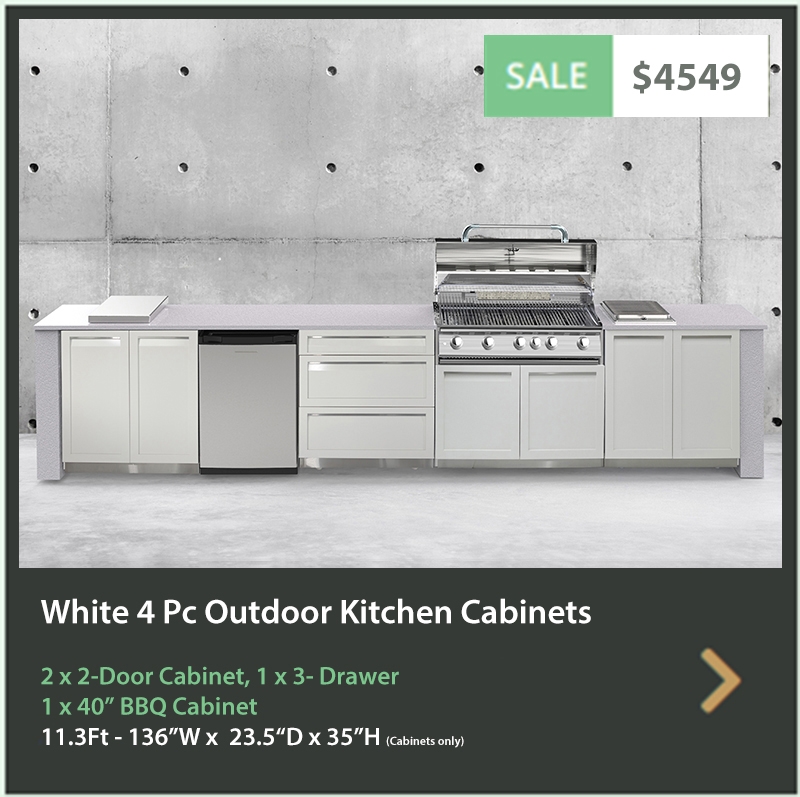
| If you are lucky to have a little more usable space to fill, you might want to include a few appliances within your design such as a refrigerator for food or beverages, a dishwasher or a full grill. For example, the below outdoor kitchen in white includes a 2-door cabinet, refrigerator, 3-drawer to organize those BBQ utensils and tools, a grill cabinet with storage and another 2-door. Appliances can be installed within the cabinets through custom stone countertops. This set spans over 11.3 ft. |
 |
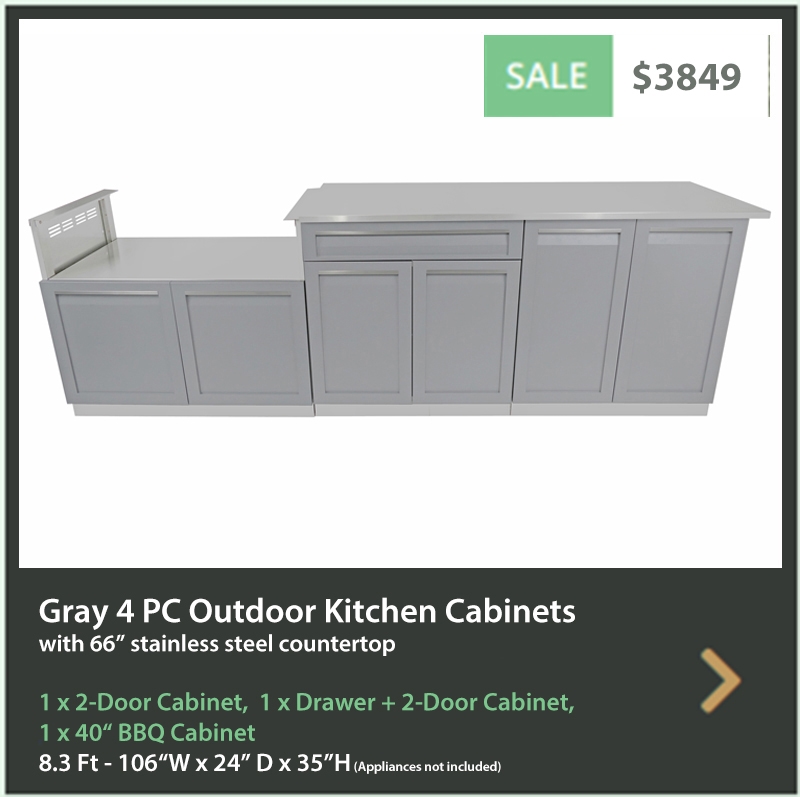
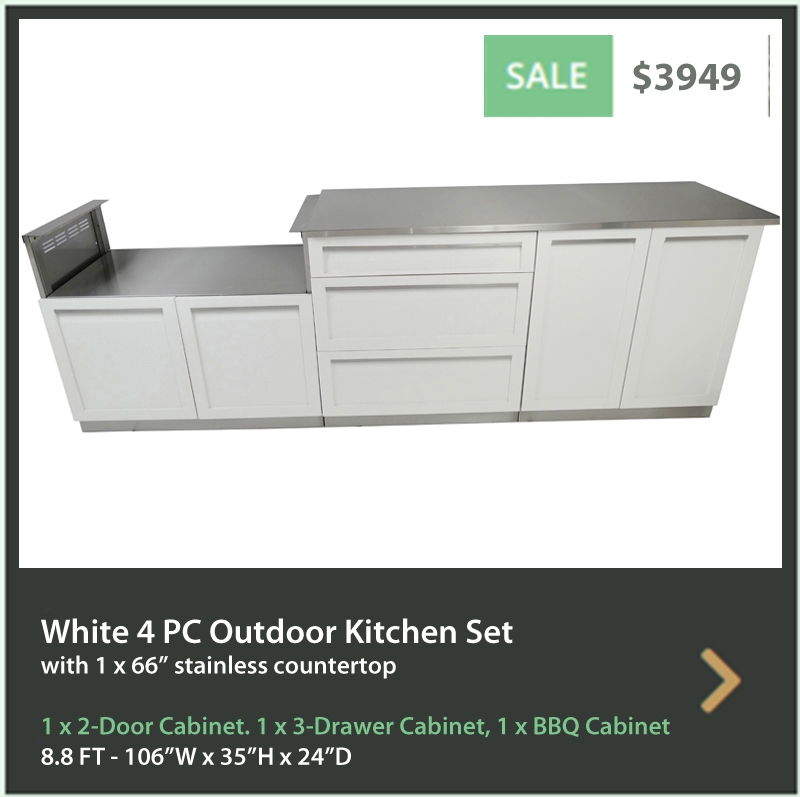
Below, this gray 4-piece budget friendly set includes a grill cabinet, 1-drawer plus 2-door cabinet and a 2-door cabinet. The second set in white includes a 3-drawer instead.
L-Shaped Outdoor Kitchens
If you have room, you can create a nice open design with an L-shaped outdoor kitchen simply by adding a corner cabinet. The corner cabinet itself has a hexagonal shape, which offers a lot of storage space within. Another option is to go with a kamado corner cabinet, to add an additional grilling option to your outdoor grill island. The kamado cabinet also offers additional storage space underneath.
Again, because they are modular cabinets, they can be positioned in any combination you wish; if, down the line, you want to make some quick changes to your outdoor kitchen, you can reposition them.
There are multiple available options in L-shaped kitchens on our website.
4 Life Outdoor cabinets come with powder-coated front panels in white or gray colors. If you are looking for a seamless look all around for your BBQ island, we do offer the side and back panels which are a popular option by our customers.
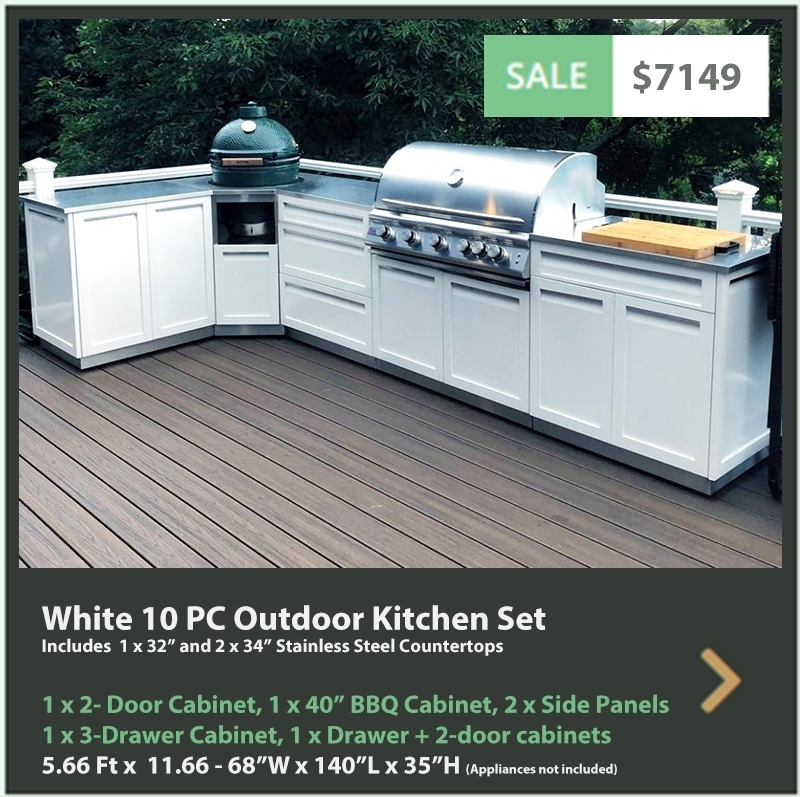
| In the next example, the customers were looking to furnish their deck with an L-shaped kitchen. They had enough room for a 10-piece and chose to include a kamado cabinet for multiple grilling options. A corner cabinet also works.
The kamado and corner cabinets come with the stainless steel countertop though if you choose a stone, you would simply remove it. |
 |
| The 5-piece shown below excludes the stainless steel countertop. Multiple appliances are included within; a drop-in sink, refrigerator and a side burner. The countertop is made of stone as a contractor would be able to cut through it. |
 |
Feel free to contact us to discuss your upcoming or future dream projects. We are happy to use your pictures and measurements to insert the cabinets into your space, always free of charge. So is our expertise.
Your Team at 4 Life Outdoor
Send us a picture and dimensions of your space to designhelp@4lifeoutdoor.com. We can place the cabinets into the picture for you to see exactly how it would all look!
Any help you need, we’re here to give our expertise.
Looking forward to hearing from you,
4 Life Outdoor team




 4 Life Outdoor Kitchens